

Part I
A township in
the Waterberg.
Vaalwater is the only town in a region of great natural beauty. Its township lives with HIV and AIDS, few jobs and deep divides. It does not look for excuses.
Group Partners has grown to love this part of South Africa and to think of it as an extended home. Despite its many challenges, it is impossible not to be moved by the natural beauty of this still largely undiscovered part of the country.
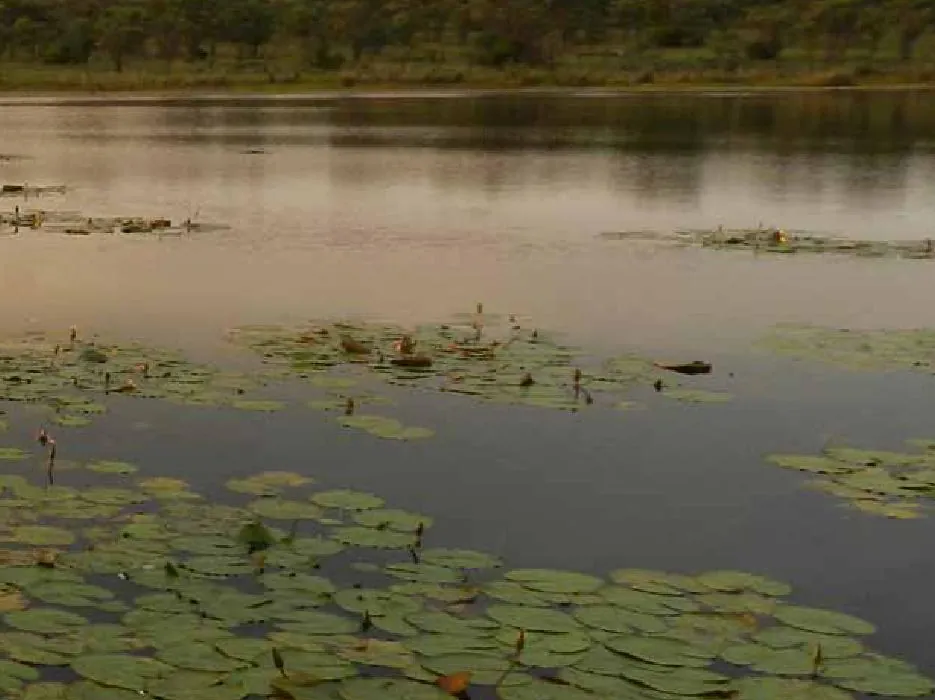
What we are talking about here are many systems, and systems within systems, that connect in different ways depending on the perspective you take. So imagine this.
You live in a small township in the Limpopo province, in Vaalwater, the main town of the area. Many homes around you are single rooms with the most basic of facilities.
Everyone in your township is infected or affected by HIV and AIDS. Job opportunities are limited and skills are not easily acquired. Not everyone shares the same motivation to find work, and what work can be found is largely unskilled. Teenage pregnancy numbers are high, and drug and alcohol abuse are the norm. Serious physical abuse and rape are common. There are significant divides between members of the community.
Now add a little more context. This is an area rich in biodiversity. It is free from malaria, and part of the Waterberg is already designated a biosphere. Not far away are private game lodges with fine game viewing. It is one of the few remaining homes in the world to a rapidly shrinking and highly vulnerable population of rhino.
So far we have described a place that is great to visit if you have money, and fine to live in if you have a job and a stable home life. How do you reconcile the extremes?
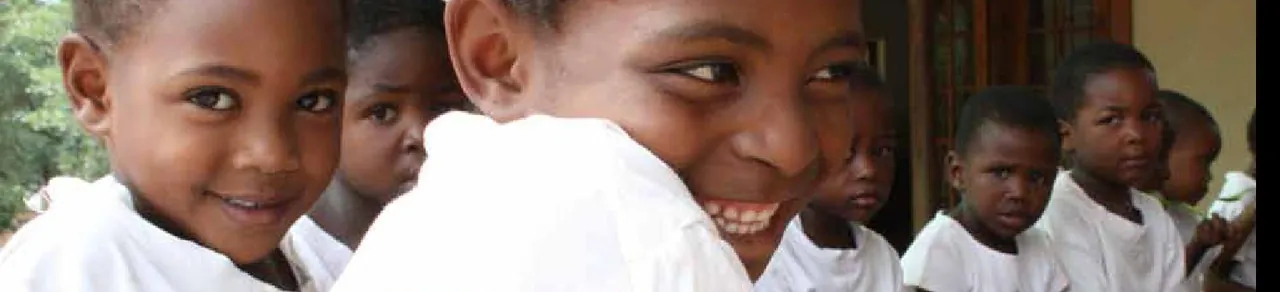
And yet the children always wave as we pass them by, with smiles that would melt most hearts. There are young men who have turned down better opportunities to keep working in this community. People have given up earlier lives and far better living conditions to dedicate themselves to it.
This is a community that does not look for excuses or adopt a victim mentality. It recognises its challenges and takes responsibility for them. There is a critical mass of people who care and work hard to do the right thing, and people can see the potential that exists. They are united through a common purpose that goes beyond any individual agenda.
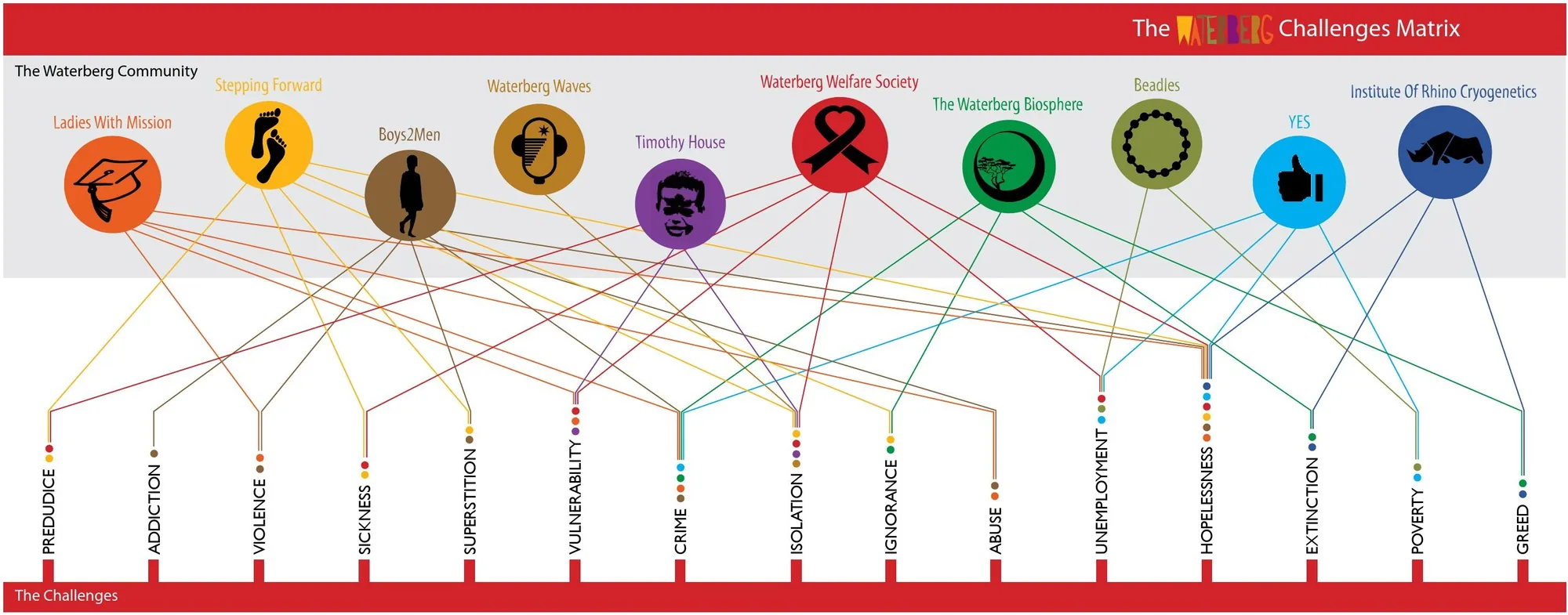
The challenges are entangled, and so are the projects that tackle them. Group Partners drew them together in one visual map, so that each project could be seen against every problem it touches.The original document published this map as a two-page spread. The spelling on the map is as printed in 2014.
Part II
From a hut
to a hub.
The Waterberg Welfare Society began as a response to HIV and AIDS in one township. It grew, need by need, into the place the community turns to.
Long before our paths crossed, concerned people in Vaalwater and socially minded friends elsewhere were putting their shared energy into the growing HIV and AIDS crisis in the area. The small rural town has suffered more than its share from the disease.
Within Vaalwater is a township called Leseding.The Waterberg Story spells it Lesadeng; WWS’s own radio brochure of 2015 spells it Leseding. It sits on the route to and from other African countries, a significant dynamic here, as the disease was introduced largely through the attentions of passing lorry drivers.
It’s no exaggeration to say that today everyone living in the township is either infected or affected by HIV and AIDS, a fact worth a few moments of contemplation.
The problem was widespread, and it was compounded by a lack of understanding among those supposedly in a position to act, and by superstition. Many saw the illness as a curse, a punishment for those who had not lived by the values and beliefs of the community. Many parts of South Africa are also starved of critical human and financial resources and suffer extreme isolation. In rural Limpopo, many people are cut off from basic education and utilities, even radio and television.
The community’s beliefs, combined with a lack of opportunity, brought consequences beyond the stigma of the disease itself.
A growing number of orphans, as children lost their parents to the illness.
Guardians who did not know how to respond, and so did not tell the children that their parents had died, or that they themselves were infected.
Young people with no strong moral awareness or sense of responsibility.
Exploitation of the vulnerable, who wanted the simple pleasures of life that others take for granted, and had only one way to pay for them.
Apathy about the surrounding environment, for people who could barely make ends meet.
Responsibilities thrust onto those who should have been focusing on their own education.
And yet the majority have a mobile phone. It is their most important possession, and it connects them to the things they care about most.
WWS started out to raise awareness of the illness, and in doing so to change perceptions, break down barriers and remove myths. That meant recognising the issues and understanding the facts. It meant creating the belief that being HIV positive was not a death sentence, and removing the stigma of a positive result.
It is a wicked problem, but don’t make the mistake of classing it as irretrievable.
It started in very modest circumstances and grew with the needs that emerged, much as nature evolves. What began as communication gradually shifted to practical care. Each new initiative responds in its own way to one shared purpose: helping this community to thrive. For WWS that means:
always knowing your status;
having a strong support network to turn to in difficult times;
access to vital medical care;
setting positive examples of responsible behaviour;
spreading the word and engaging others.
The themes of prevention, awareness, access and empowerment run through all of the work.
Integral to WWS is the mobile clinic. It reaches those who need it, offering testing, counselling and transport for those who need more intensive care. Knowing your status may sound like plain common sense. Put yourself in the lives of the people being asked, though, and it is much more than the fear of discovery. You have to create awareness that this matters, and belief that it is not an immediate death sentence. You have to create trust, so that people open up and accept your help, while preserving their dignity and self-respect.
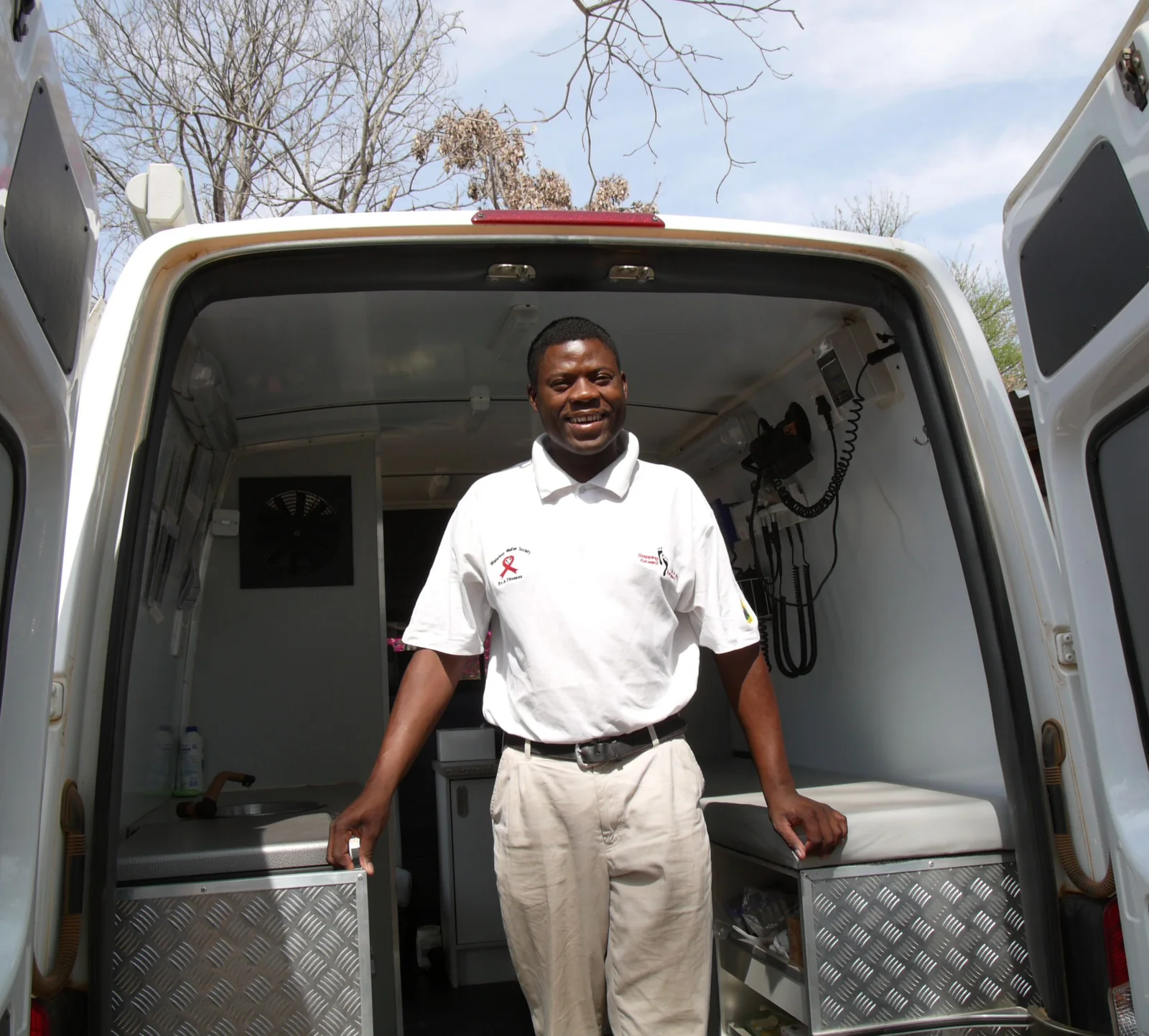
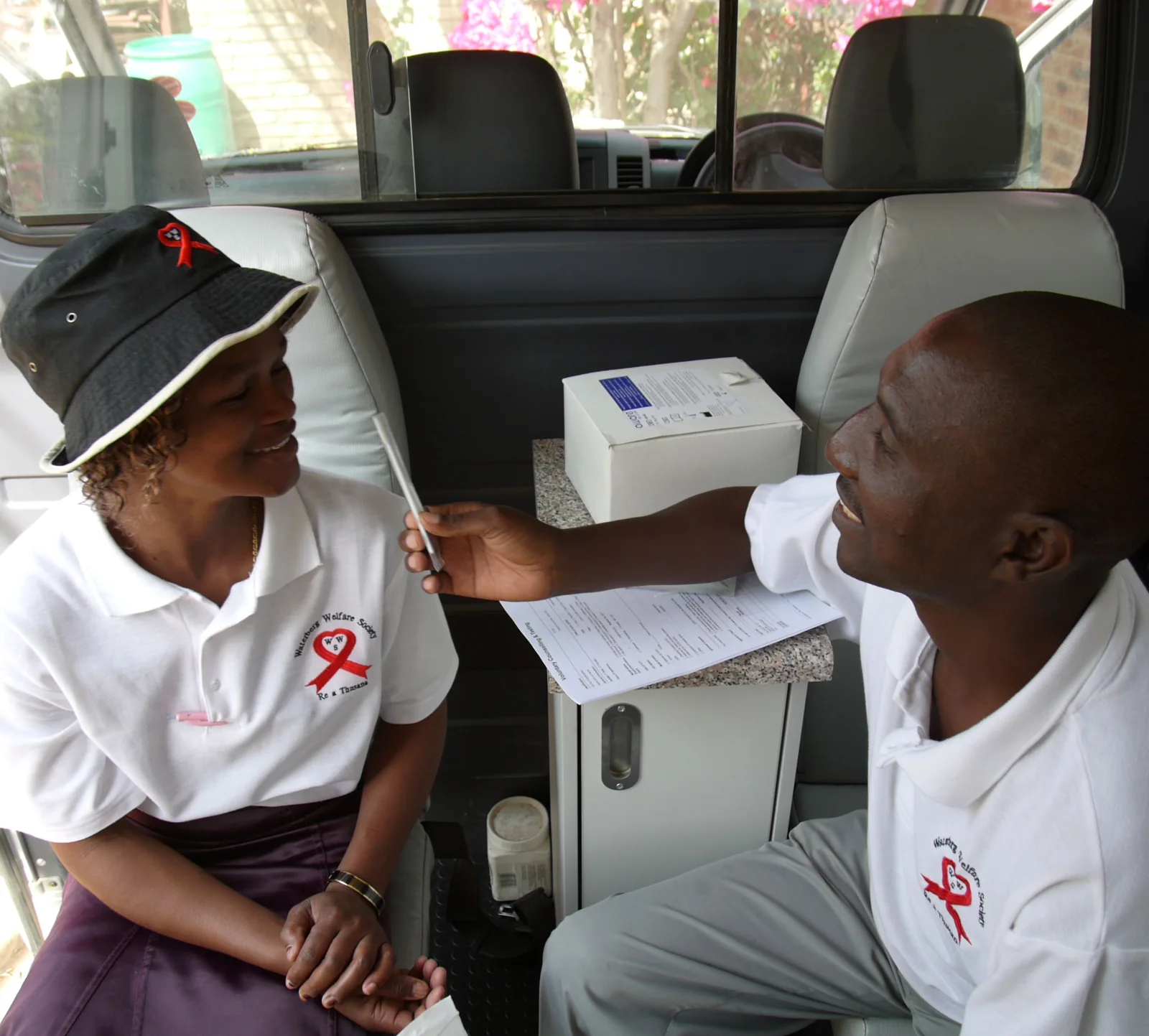
The power of Stepping Forward is that it reaches out to people on home ground, with a support network behind it when the dreaded news becomes real. Having the mobile clinic there to counsel as well as test makes a great difference, above all to whether a person goes on to treatment and changes their behaviour.
Stepping Forward has the most inspirational of ambassadors in July Letsebe, who knows the challenges and stigma of HIV and the chance to overcome them and live well, if treatment and advice are followed. July was close to death when he was finally carried to WWS. Now he represents enormous hope, and he is the best evidence of all for the value of Stepping Forward.
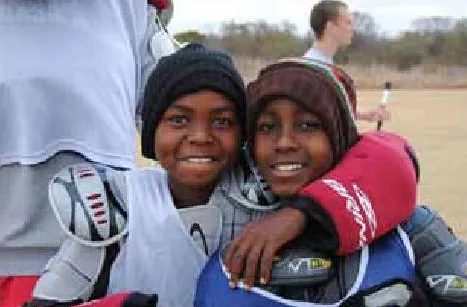
Sport plays its part. Soccer, lacrosse and basketball are welcomed by the community, and they are an ideal time to encourage people to find out their HIV status while doing something else, in a neutral place.
The WWS journey has now been drawn three times, each version picking up from the last. We worked on the ground to tell the story with the team, directly on the walls of the building. It begins in that first hut, and it has given the community a tool for engagement. The story has taken visitors and investors on the journey and helped them see why the work matters. Our latest visit, in 2013, brought it up to date.
The emphasis is shifting as the authorities take more responsibility locally. Even so, patients will need the WWS hospice for some time yet: for day care and respite, and to recover more quickly in the early days of treatment. For some it is simply a more dignified and caring way to face the inevitable.
15,000
people, approximately, in the community’s target group had been through WWS prevention and awareness workshops by 2014.
What started in a small hut has become a hub of the community. Every part of WWS emerged in response to a need the authorities were not equipped to meet. By 2014 its achievements included:
a firm foundation of organisational structure, principles, and operating and monitoring systems;
access to voluntary counselling and testing for HIV and AIDS, and to treatment, including antiretroviral medication;
a mobile clinic, acquired, equipped and piloted to run a complete HIV treatment programme across the surrounding farms and communities;
a care plan for registered patients and for orphans and vulnerable children, with membership of the Hospice and Palliative Care Association;
Timothy House, a drop-in centre for orphans and vulnerable young people on site in Vaalwater;
Boys2Men, Waterberg Waves radio and recording studio, and the Dumela vegetable garden, which earns an income.
Another milestone followed as local health services began to take responsibility for medical treatment, freeing WWS to focus on its core mission while remaining a valued partner. It is a good example of public and private collaboration, and one that many organisations could learn from. We like to think of WWS as an incubation hub: a place where ideas are given life and people can create opportunity.
Part III
Giving the youth
a voice.
Timothy House turned attention to the next generation. First the boys formed a club of their own. Then the girls stood up and presented their own framework.
Timothy House is an umbrella programme for the young people of this community. It is an incubator where the younger generation create projects, and a life support system for young, vulnerable children. It is run by our great friend Zach.Zachariah Sekhu, named as a WWS contact in Introducing the WWS Model, 2016.
Having met immediate physical and emotional needs, WWS turned to more lasting solutions, and to the next generation: the first who could really change the dynamics for the future.
It started with the boys, often forgotten, though their behaviour influenced so much. They were given their own identity in a club, Boys2Men, for boys who championed a new attitude to responsibility, to sex and to the way girls are treated. Above all, in the early days, the club was a safe place to share fears and challenges with peers who understood, young men who could support each other through difficult times.
The boys did not let their sponsors down. The first group are now young men who have graduated from this most vital of academies. Some now work for WWS and others have gone on to further education. Most are still part of the alumni.
Not Just Soccer is a board game built around a football pitch, every boy’s favourite sport. As you cross the pitch, questions are asked, and the answers come from anyone who can offer insight. These questions break your heart to read. They are based on real situations no child should face, and each hides a true story for one or more of these boys. Through the game they get the answers they need but struggle to ask for, and they still made it fun.
The first club has done so well that outlying areas are asking for their own. So the boys are learning to be designers and advisers, teaching others how to set up a Boys2Men group. They may not have heard of scale, repeatability or franchising. To them it is simply the right thing to do, and they do it in the best way they can.
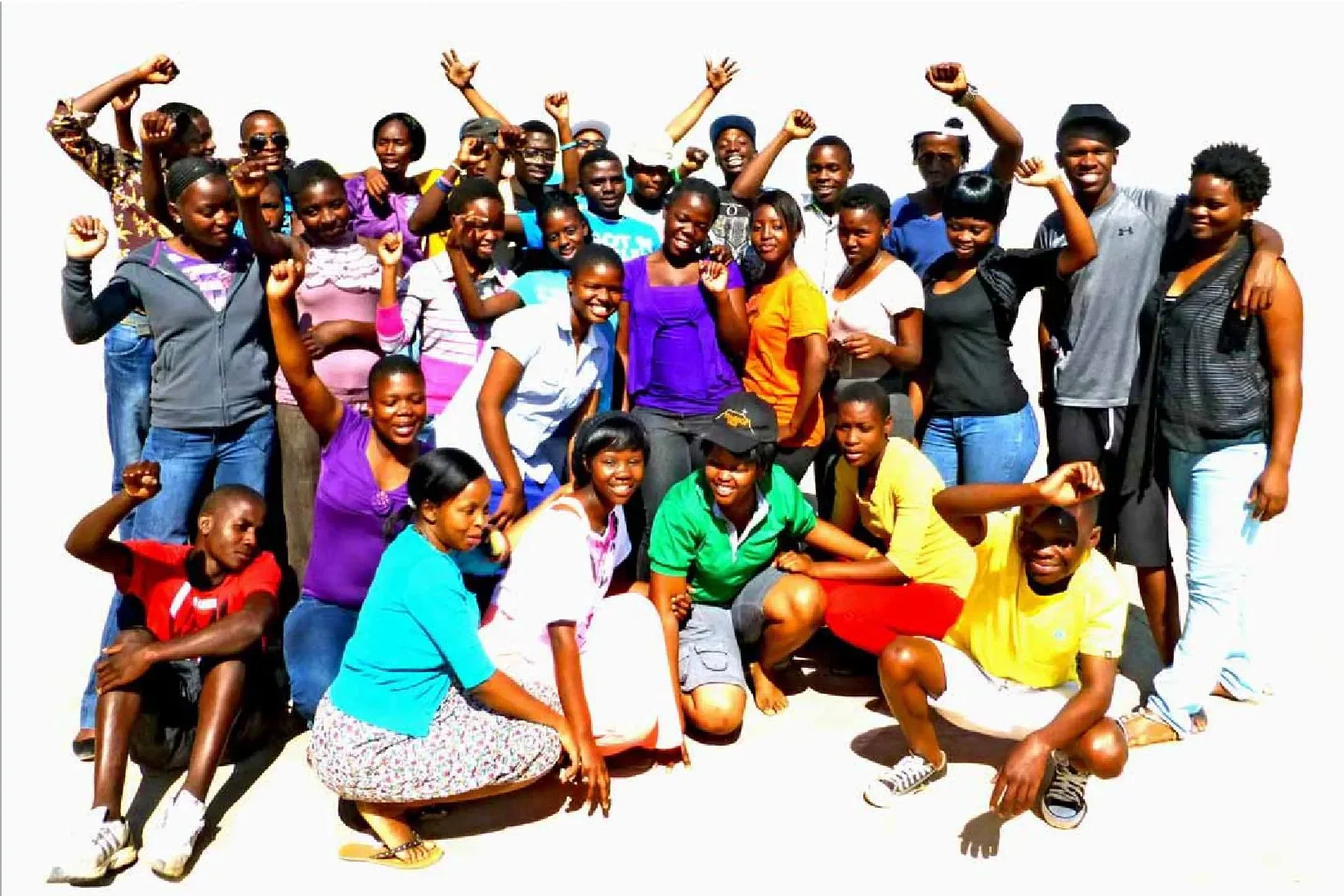
Then the girls. It was important that they first established an identity of their own. Ladies With Mission was in its very early stages: a clear intention, but a work in progress. This is a community that often sees girls more as possessions than as individuals. To boys they are sex objects, to parents an extra pair of hands, and to orphaned siblings mother, sister and aunt. Through all of this they struggle to make time for an education most never complete.
Over three consecutive days we watched a group of mostly teenage girls grow in confidence and belief, in creativity and self-awareness. We have seen all kinds of organisations defeated by challenges that are almost trivial by comparison, and mostly self-made. Not these girls.
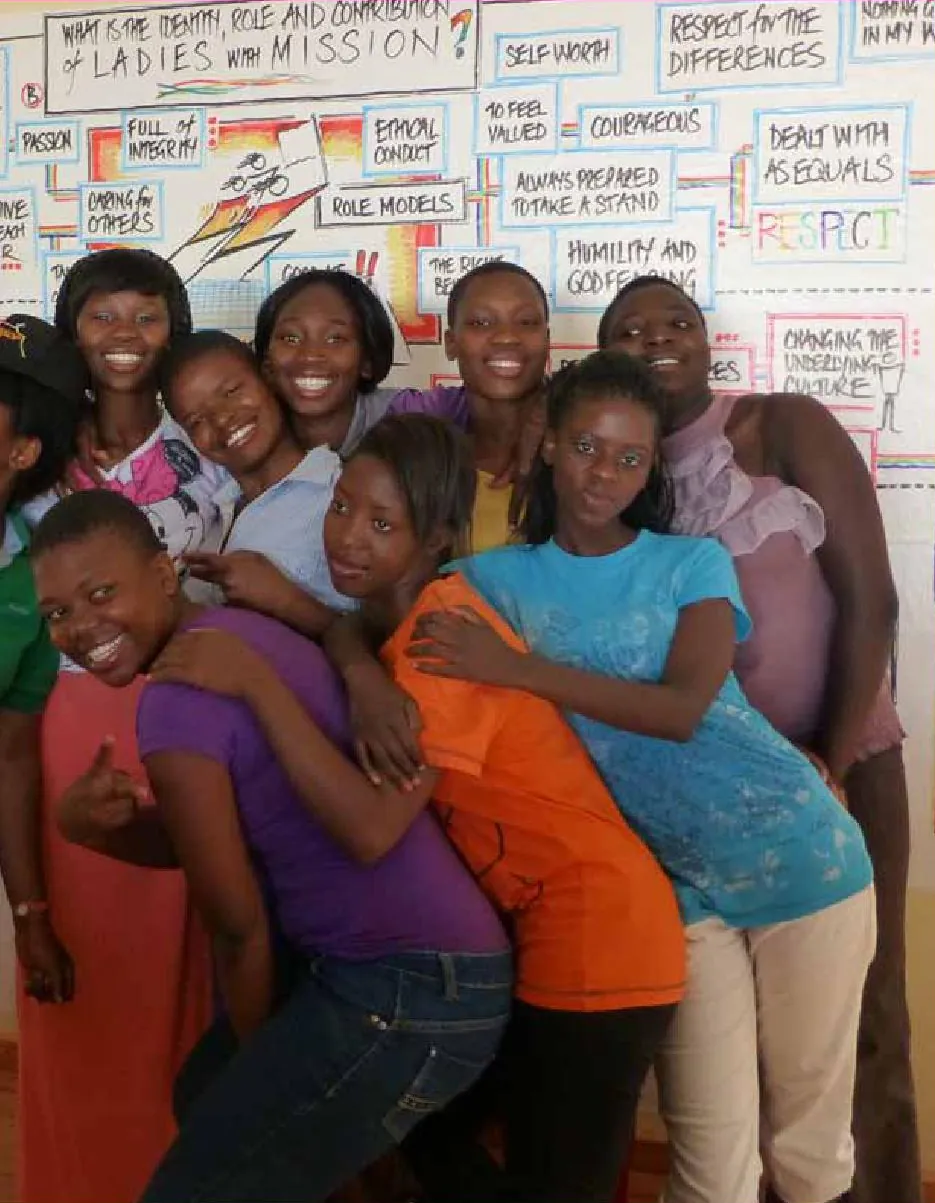
On the final day they stood up in front of a group of boys, the same boys who had grown up believing that the man is the head of the house and the one who makes the decisions, and proudly presented their framework.
The first reaction was complete surprise. Gradually each boy found his voice. There was surprise at the girls’ confidence, then genuine and warm respect. There were new feelings too. Were the girls trying to take over as head of the household? Why were the men not sorting these things out? Then came pride in their girls, and a heartfelt commitment to support them.
Then one of the boys made a declaration we can only hope will spread. He looked at these girls and discovered that their minds and thoughts could also be attractive, that these were girls whose company he would enjoy. Bravo, Finius. If only we had captured your speech.
The girls have many good ideas, and some can be acted on quickly. They have plans for a game of their own that the boys can play too, so each can hear the other’s perspective. We left them with plenty to work on: a taxi company run by girls, a coffee shop, a cultural centre, a beauty salon and a safety network along the lines of a neighbourhood watch. Boys and girls also have the gift of a house to share and look after, a place of safety and possibility. It is to be called LIYA House.
Part IV
A living
system.
The Waterberg Biosphere Reserve and WWS share networks and a way of thinking. One Saturday, the people with a stake in the Biosphere sat down together around one question.
In many places the debate has become binary: people fight either for their environment or for the welfare of their community, as if such a choice were possible. In the part of the Waterberg we have been working in, there is a far more systemic approach. Not everyone has bought into the model, but enough people are tackling problems as a whole for an integrative approach to take hold.
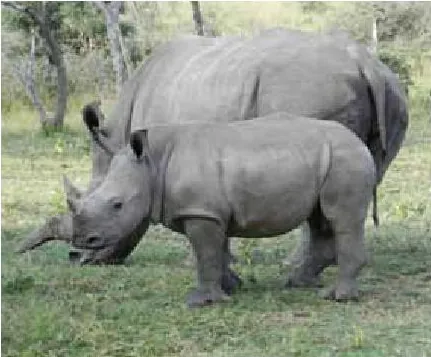
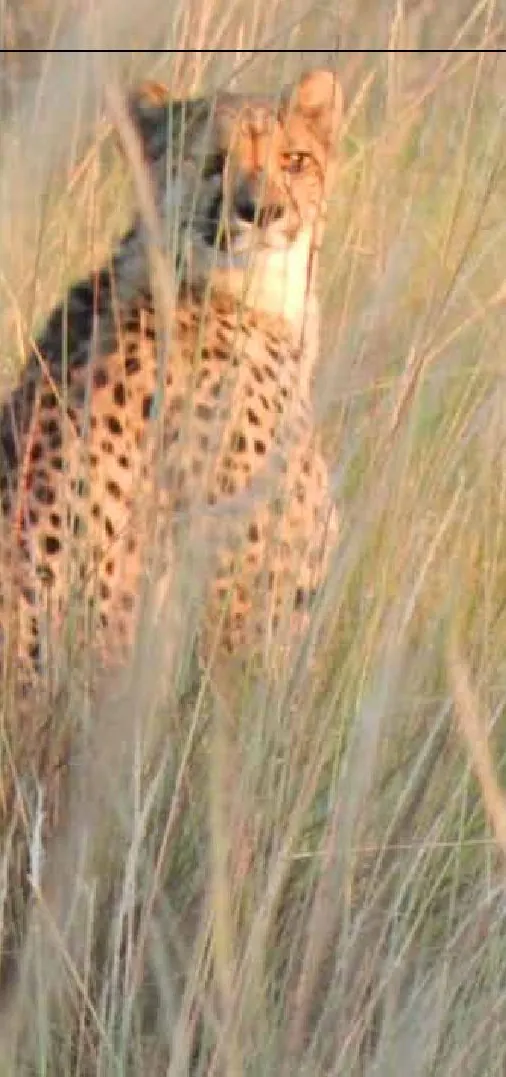
The Waterberg Biosphere Reserve is already recognised by UNESCO, and the area it covers was about to grow significantly. The project is being used to create more opportunity for everything that calls this place home, and that means all forms of life, not only people.
There is a beautiful synergy between the Biosphere Reserve and WWS, and not only because their networks are closely connected and supportive of each other. We are always delighted to hear clients talk, in their own language, about operating as a living system. Working in the Waterberg let us get inside the dynamics of a real living system, with all its complexity and authenticity, and take part in shaping its strategic direction.
The challenge does not lack clarity, information or intellectual horsepower. What it lacks is active participation and recognition. Once more people are engaged, some unifying model is needed to keep everything connected, so the principles that earn the region its status are not lost. Most importantly, it has to be done without building a bureaucratic machine that repeats the mistakes of large organisations everywhere.
A lot can be done when people spend time together on one specific question. Key stakeholders, people with a very real interest in the future of the Waterberg, gave up a Saturday to begin what we hope will be the first of many such conversations.
What is the recipe for a sustainable Biosphere?
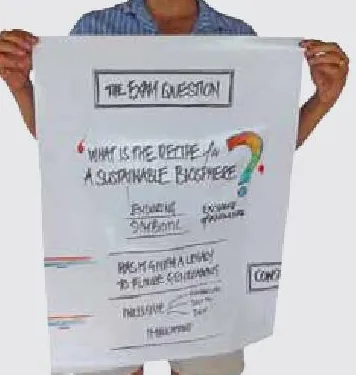
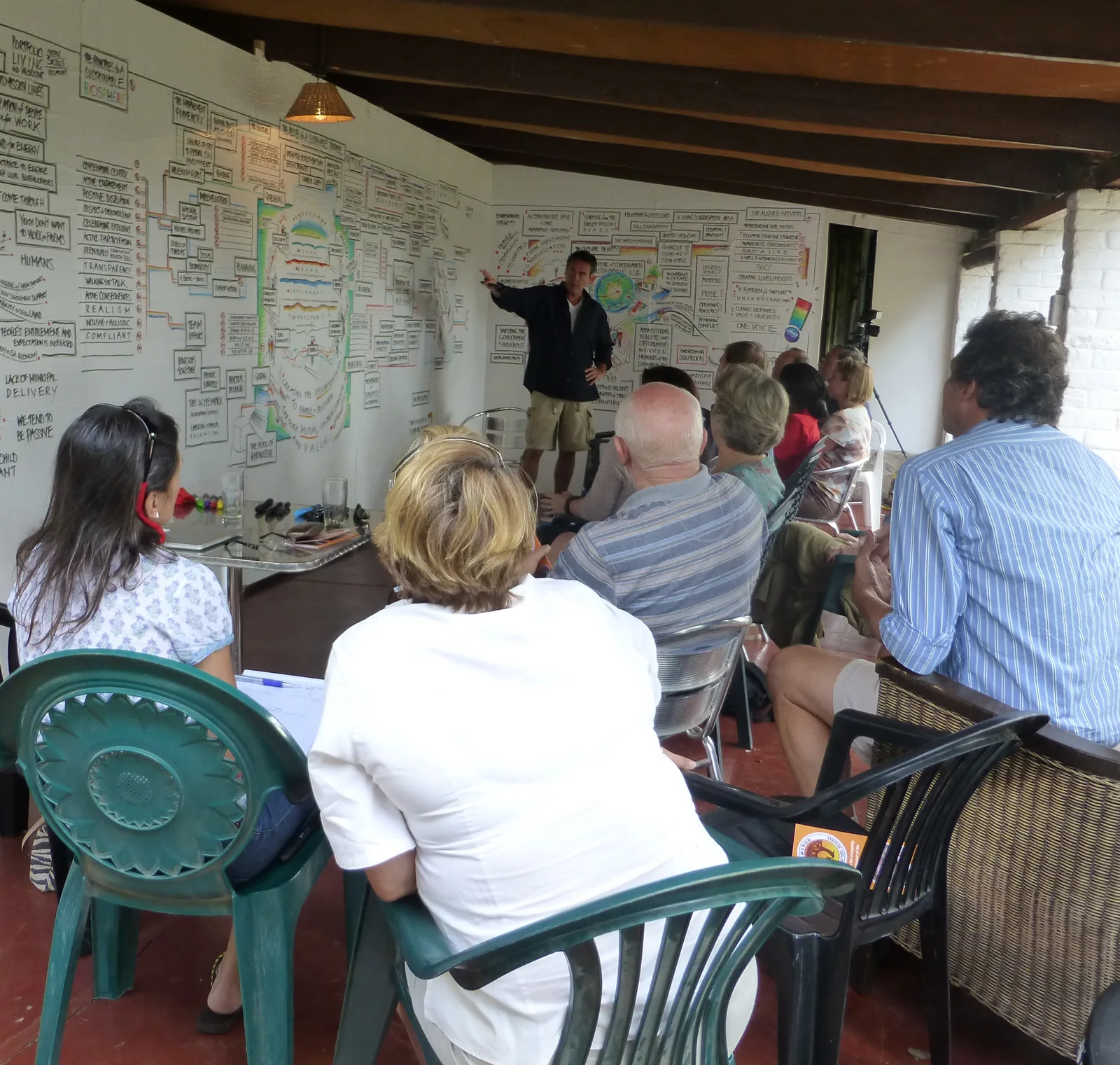
The first task is to develop the messages and stories that will make others want to join, by giving the Biosphere a stronger identity, one that becomes synonymous with living systems and thriving communities. As with WWS, we hope the model will have merit elsewhere: for other Biosphere projects, and in business as well.
One moment in the session is worth telling for its simplicity. Our friend Zach, a veteran of our process, was the only member of his group who really understood how people felt in the township. The group was genuinely bemused that job opportunities were being turned down. Surely any job was worth having, they reasoned, and minds were made up about the motives of those refusing what looked like a lifeline.
Then Zach explained the realities from another perspective. He simply told it as it is, what life is really like. Suddenly the group could see through his eyes. The big insight, especially for those in business and further removed from the township, was that they did not really know what people thought. It could so easily have been missed had Zach not spoken up.
How easy it should be for us to simply share perspective, and yet how hard it is in reality.
Now there are the beginnings of a connected network of initiatives working in harmony around a shared purpose: the wellbeing of everyone who lives in the community. Not everything joins up as much as it could, but the foundations are there, and the leaders of these initiatives are more aligned than those of many successful businesses in the western world.
Part V
A model others
can use.
By 2015 WWS had worked for fifteen years and organised its expertise into departments. A year later it set out the WWS Way: a model for other organisations to adopt.
Our mission is to help the people in our community to enjoy the best possible quality of life and to generate opportunity for young people so that they are able to make positive contributions to society and realise their ambitions.
WWS began with a simple desire to raise awareness in a community devastated by HIV and AIDS, and that work continued fifteen years later. Through field work and partnerships it developed a holistic approach. Treatment has to be available, and people, infected and affected, have to understand why adhering to it matters and how to live the best life they can. That means knowing their status and persisting with treatment, among other things.
WWS set its work against a global target. In October 2014 UNAIDS called for a new, final and ambitious target for HIV treatment by 2020.
Its teams organised their expertise into three departments that work together closely: Education and Awareness, Treatment and Care, and a department for the youngest members of the community. Hospice and day respite at WWS ease the burden on beds already stretched at the hospital. A bright yellow truck, the gig rig, is well known in Vaalwater, and at public events the team has counsellors on the spot for anyone who receives a positive result. From the beginning, they know they are not going through it alone.
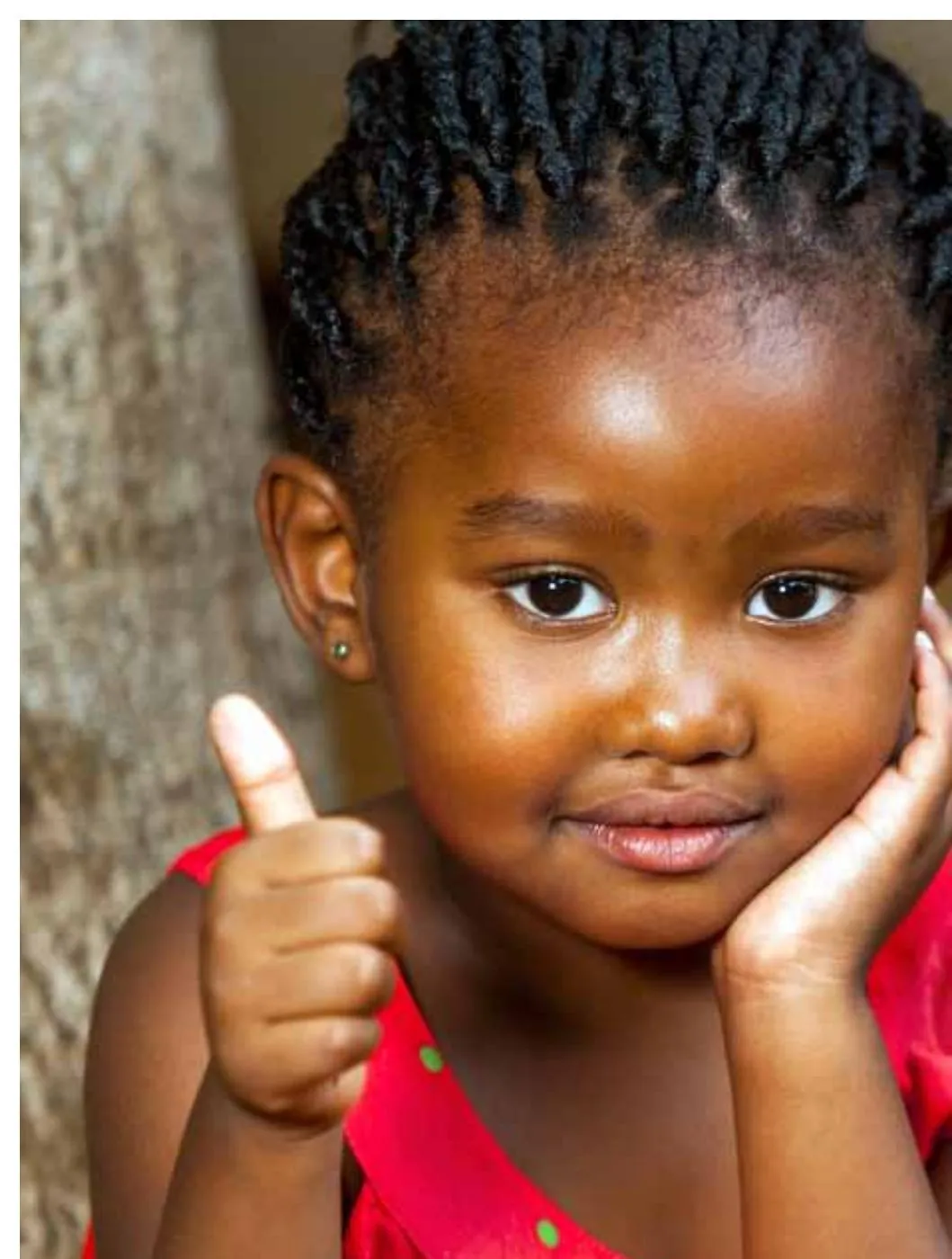
Development starts at pre-school age. The youngest children spend each morning at WWS. A safe place to play and learn helps those who care for them too, often a brother or sister, an aunt or a grandparent rather than a parent, who need that time to manage their lives, study or earn a living.
The people running the programmes have all been touched by the challenges they deal with. They have faced tough choices and extreme hardship and come through with their self-belief intact. Some have gone on to university or started businesses. Most people who become involved with WWS never fully leave, and some have turned down attractive jobs to give back to their community.
The Empowerment Centre marked a new milestone. Built by WWS on its own land, it gives a small number of new micro businesses the basic infrastructure to start up, with training from experts in co-operatives and small business. For WWS it is also a new business model: income from leasing the space lets it help more people.
Against all odds we have seen hope restored in communities and we believe that many of our practices would be valuable to others tackling similar challenges.
In 2016 WWS set out its model. It has one core purpose: to build and sustain healthy, thriving communities. It took many years to develop, and first had to be taken apart so that every element of what WWS now calls the WWS Way was included.
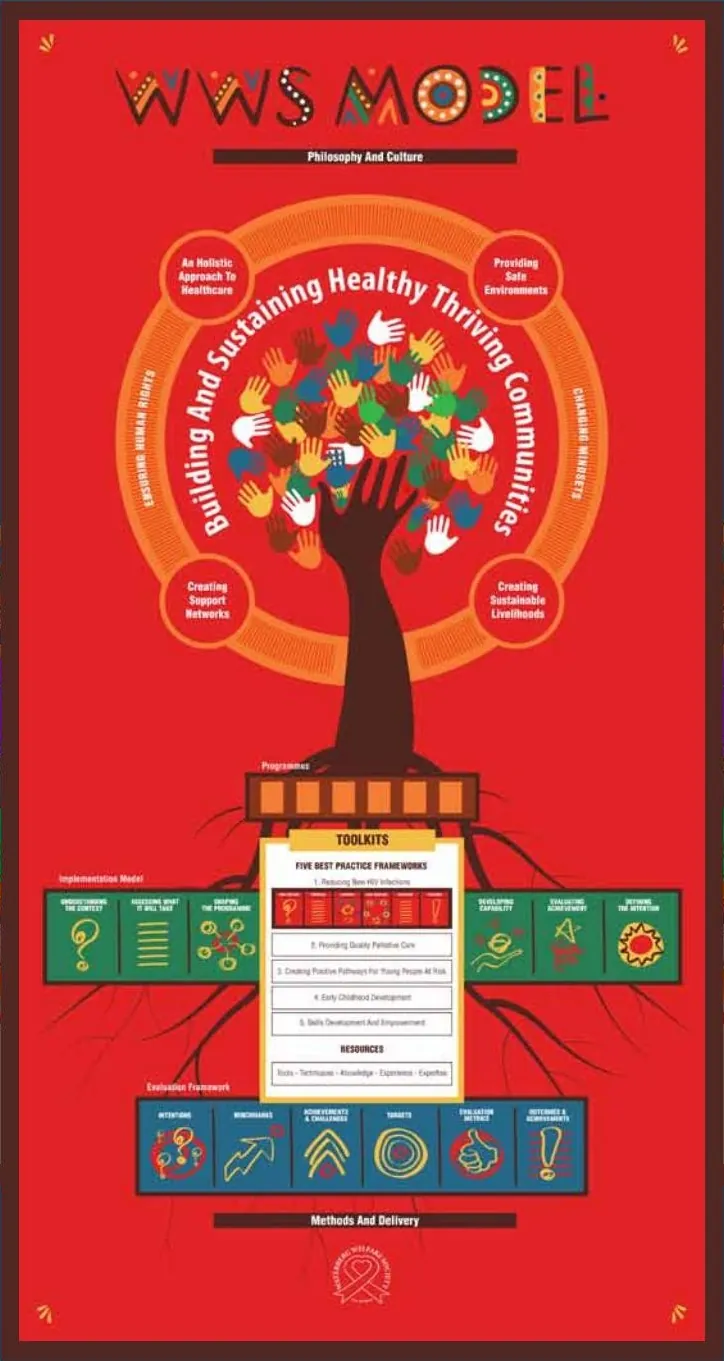
Six themes run through it. Four shape the services and programmes: a holistic approach to healthcare, providing safe environments, creating support networks and creating sustainable livelihoods. Two more cut across all four: changing mindsets, and ensuring people’s basic human rights.
Five best practice frameworks keep the approach consistent: reducing new HIV infections, providing quality palliative care, creating positive pathways for young people at risk, early childhood development, and skills development and empowerment. Each has the same structure, from what matters and the principles behind it, through the local dynamics and the best practices, to evaluation and outcomes aligned with national targets.
Best practices typically fail when the same approach is applied in exactly the same way everywhere. There is a big difference between a consistent model built on frameworks and forcing one solution on every situation. Every community has its own context, and those who serve it have to take that context seriously.
The hardest thing to bottle is culture. The WWS team insisted it was integral to any model. Replicating the practical work is hard but achievable. Recreating the culture, and honouring the philosophy and values that overwhelm anyone who visits, is quite another thing. In ten years of working with WWS, none of its key people has left unless through unavoidable circumstances. Without that commitment there is no WWS Way.
Part VI
Be the
change.
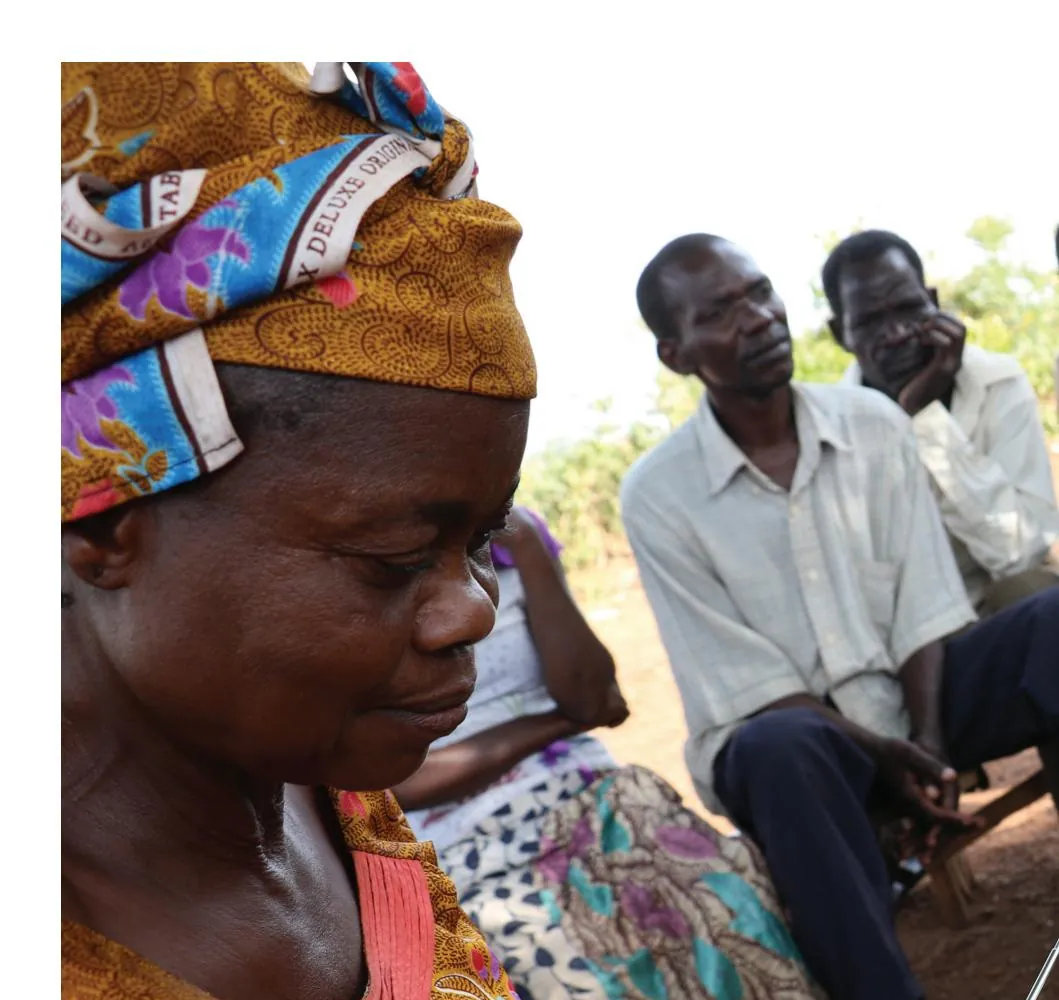
A four-week trial filled the streets with people holding phones to their ears. With a licence granted, Waterberg Waves set out to become the voice of the region.
Four years earlier, a locally run radio station in Vaalwater, serving the township of Leseding, had been a big vision. A Special Event Broadcasting licence allowed trial broadcasts, and community consultation meetings proved how popular it would be. For four weeks the Waterberg Waves station broadcast to an excited audience. The streets were full of people holding their phones to their ears, listening to music and local news. Support was unanimous.
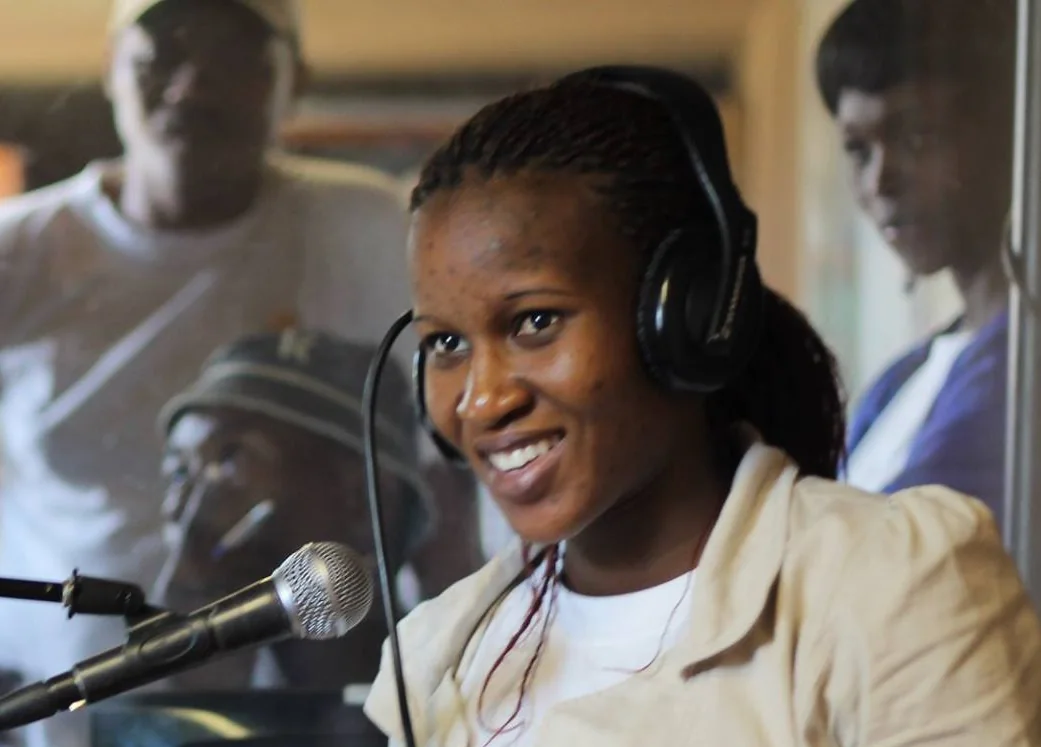
With its licence granted, the station could serve everyone in the community, with programmes about the Waterberg, its people, conservation and nature. Its vision is to create a voice for healthy communities through edutainment. In a small rural community, radio is a lifeline. It can create a platform for positive and constructive exchange between communities and government, and the young team running it gain skills that will serve them well beyond the project.
92.8
FM, the station’s frequency
24/7
on air, every day
21
radio programmes planned
5
languages, chosen with the communities
Source: Waterberg Waves Community Radio, 2015.
Coverage reaches six local municipalities in the Waterberg: Modimolle, Mogalakwena, Mookgophong, Bela-Bela, Lephalale and Thabazimbi. Programmes cover news and current affairs, health and lifestyle, religion and culture, nature and conservation, music and sport, education, and a programme for children.
Listeners are invited to take part by calling in, by text and through social media. This is more than a radio station. It is a vital part of the WWS network, strengthening other projects under way in the community and the municipalities.
Part VII
How change
happens.
Few projects have given Group Partners so much. What the Waterberg teaches about change in a complex situation applies well beyond it.
It is hard to imagine anyone visiting, even briefly, and not being inspired by the people of WWS. Each has a story to tell; some are harrowing, and all are humbling. In our work we help them put their thoughts, hopes and concerns into words, and share their vision of the future and their part in it.
So how does change happen in a complex situation? We see it happen through:
understanding the local dynamics;
knowing what is possible, and when the time is right;
helping people to help themselves;
always being mindful of the big picture;
being ready to spot the results and the opportunities;
having passion and empathy;
seeing the connections;
believing in people;
allowing mistakes to be made.
Our journey with our friends in the Waterberg will evolve, and we do not know exactly how. There are many things we could imagine doing, but we are learning that they have to be allowed to emerge in good time. What we must be is alert to the dynamics and the context, so we can respond in the right way when the time comes.
Over recent years few projects have returned so much to our hearts and minds, or rewarded us in ways a commercial relationship seldom does. This work is part of Group Partners’ stated strategy as a business, and a next step in our own evolution. We will keep providing services to the community wherever and however we can.
First published by Group Partners in March 2014 as The Waterberg Story, with later material from Introducing Waterberg Welfare Society (2015), Waterberg Waves Community Radio (2015) and Introducing the WWS Model (2016). Names and figures are as they stood then.