How we do what we do
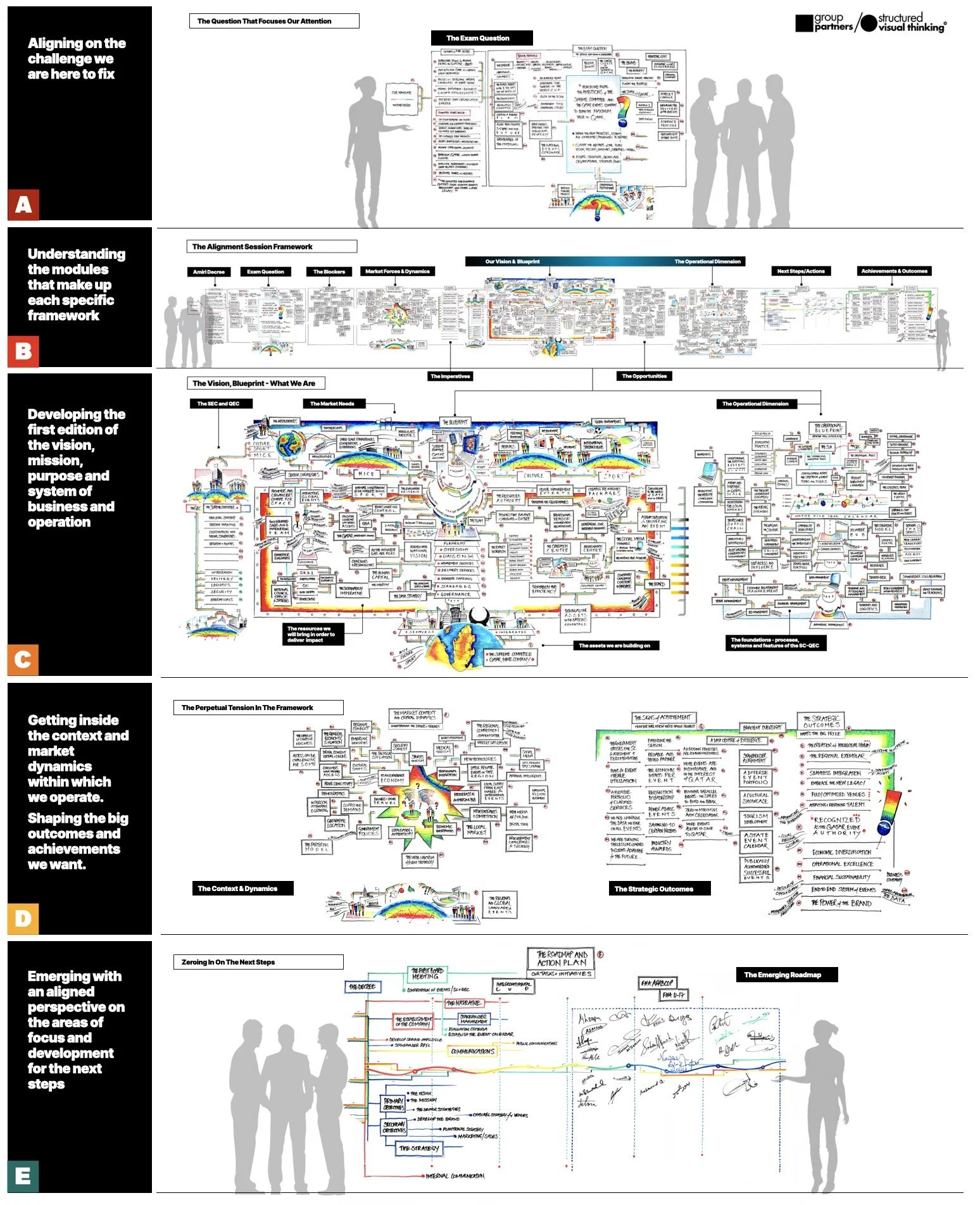
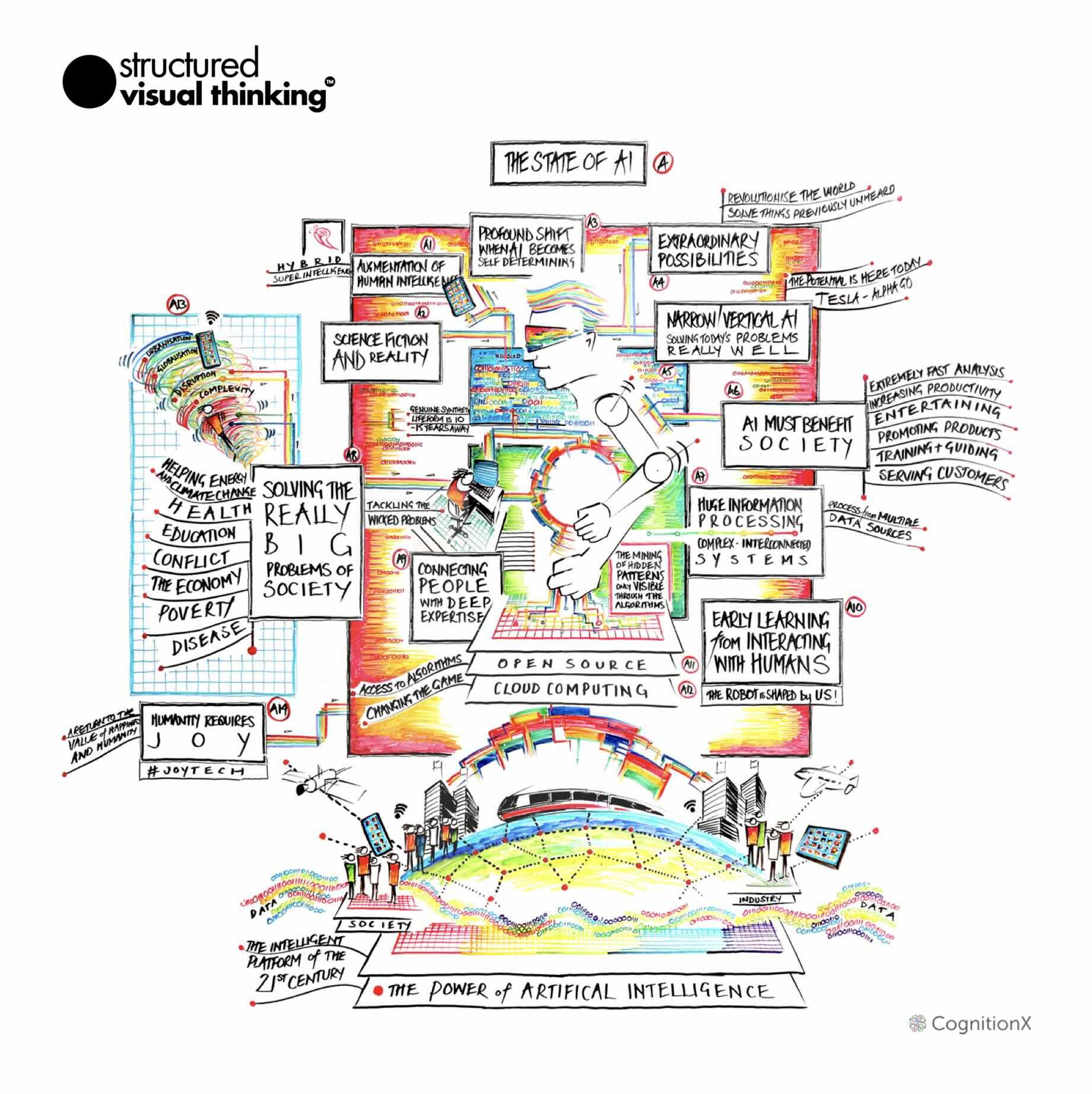
A visual tour through the approach and cadence we typically apply to our clients’ challenges.
-
Structured means giving a messy problem shape and discipline so it can be worked on properly. It involves defining the real question, breaking the issue into clear parts, setting boundaries, and making explicit what matters and what does not.
Structure reduces noise, exposes assumptions, and creates a shared logic so people are solving the same problem rather than talking past one another.
-
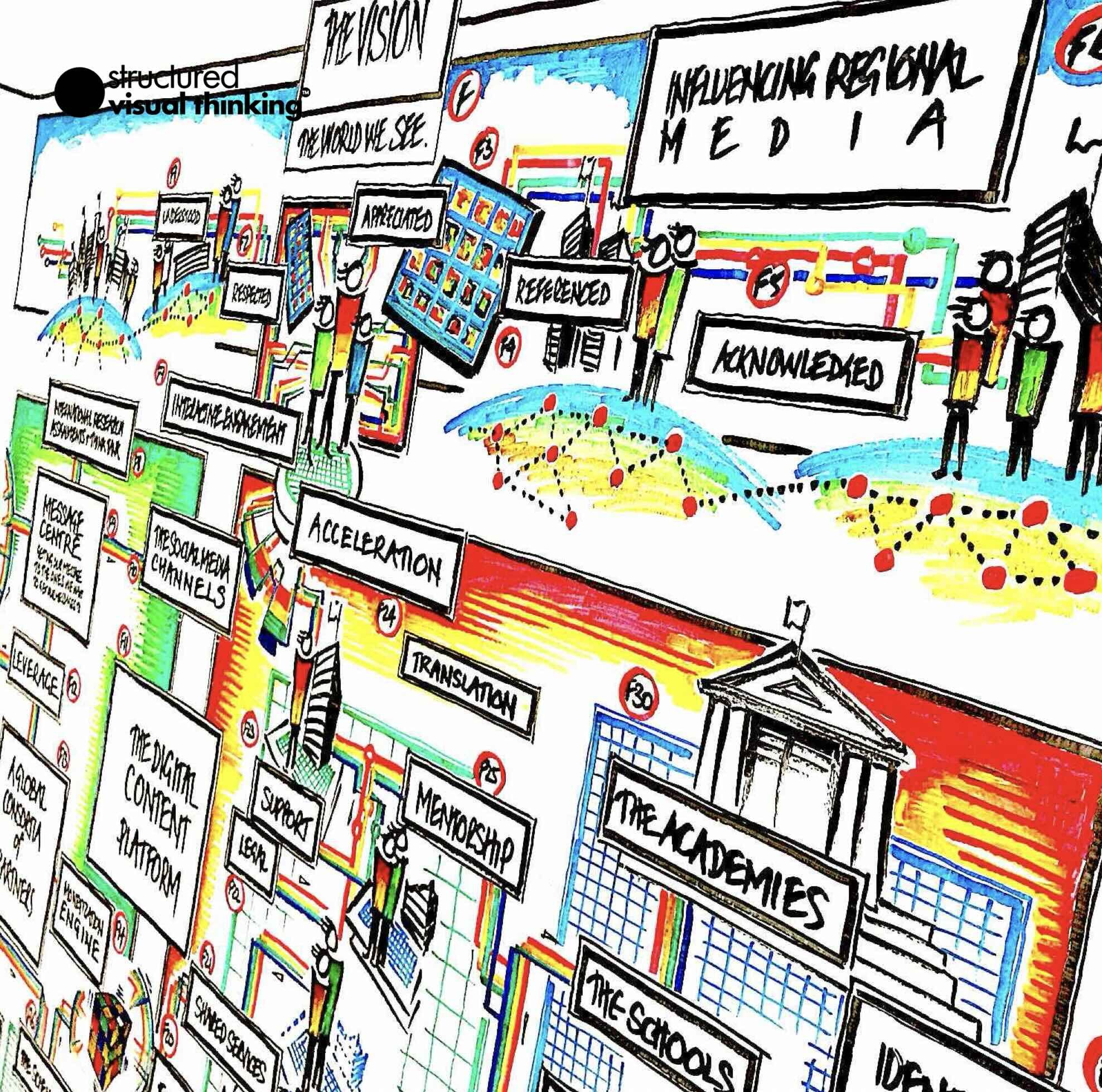
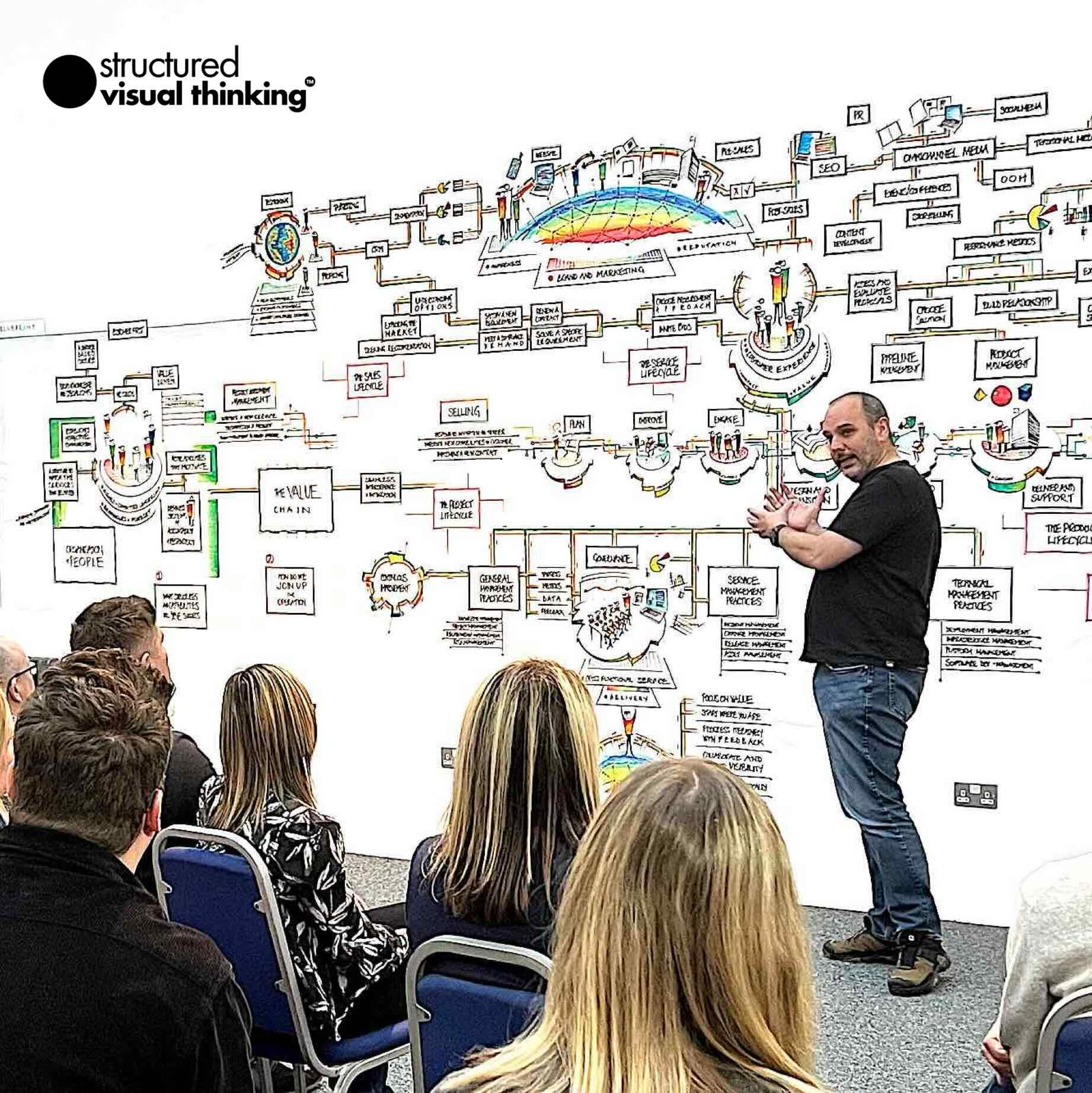
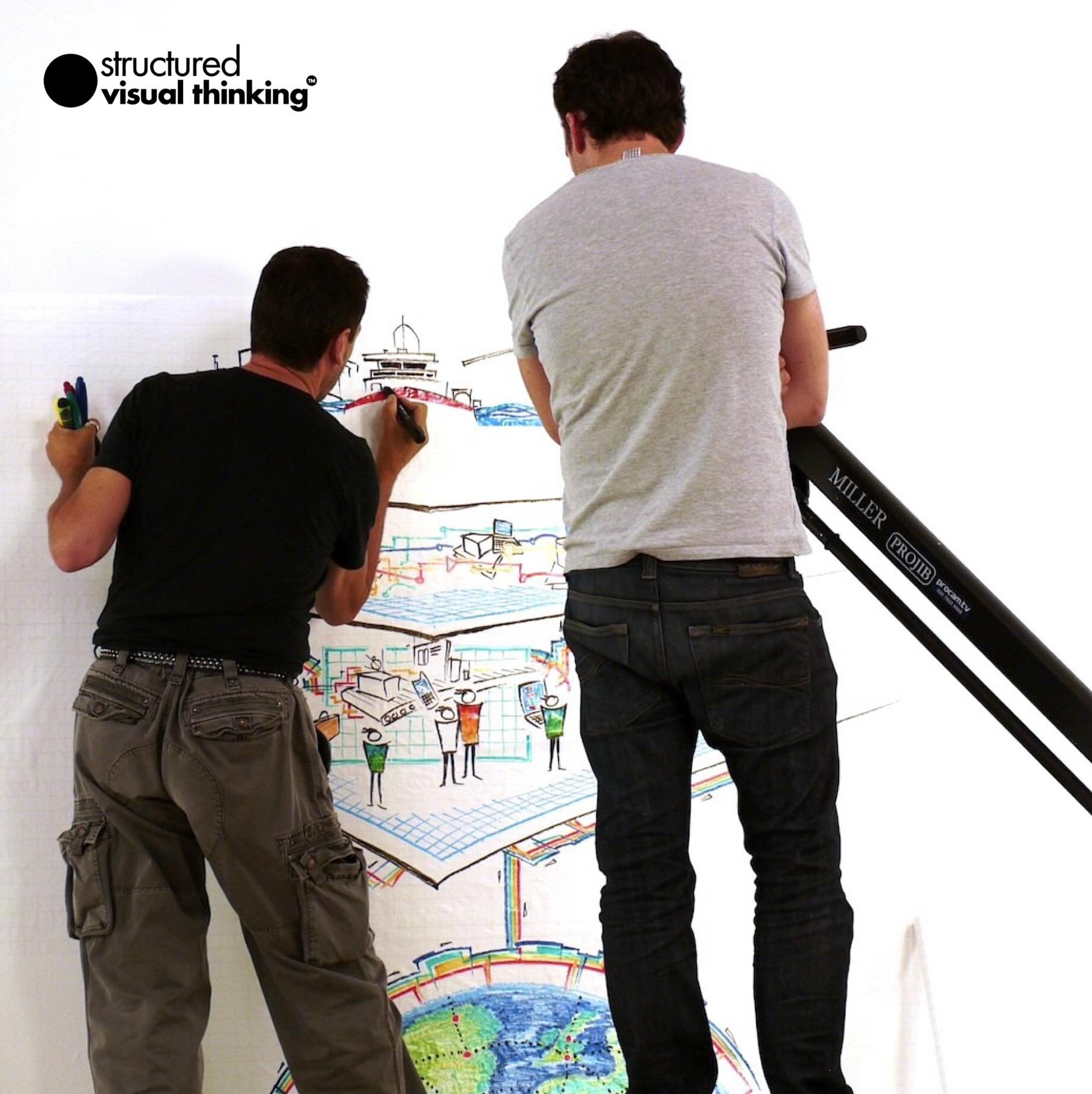
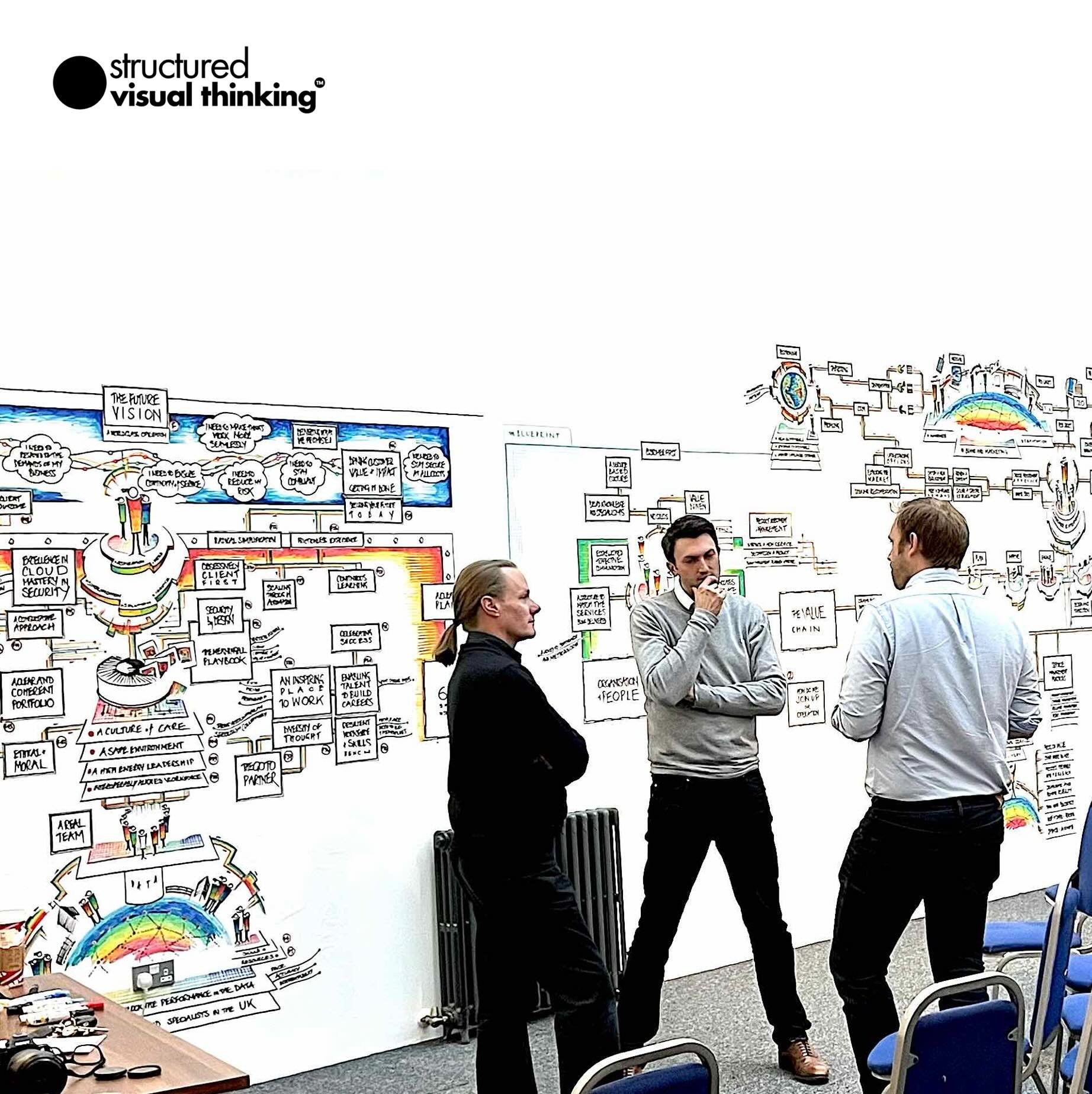
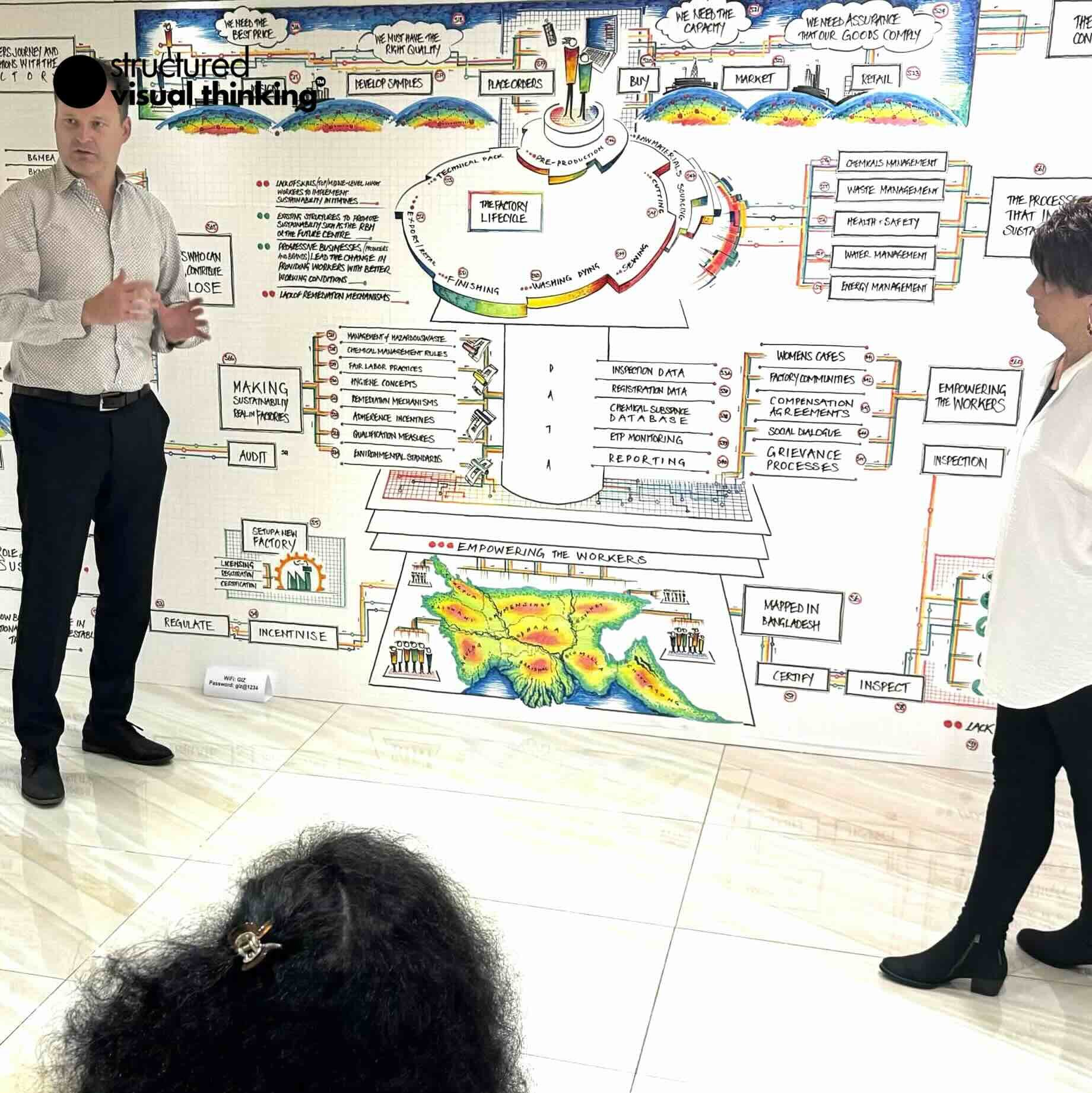
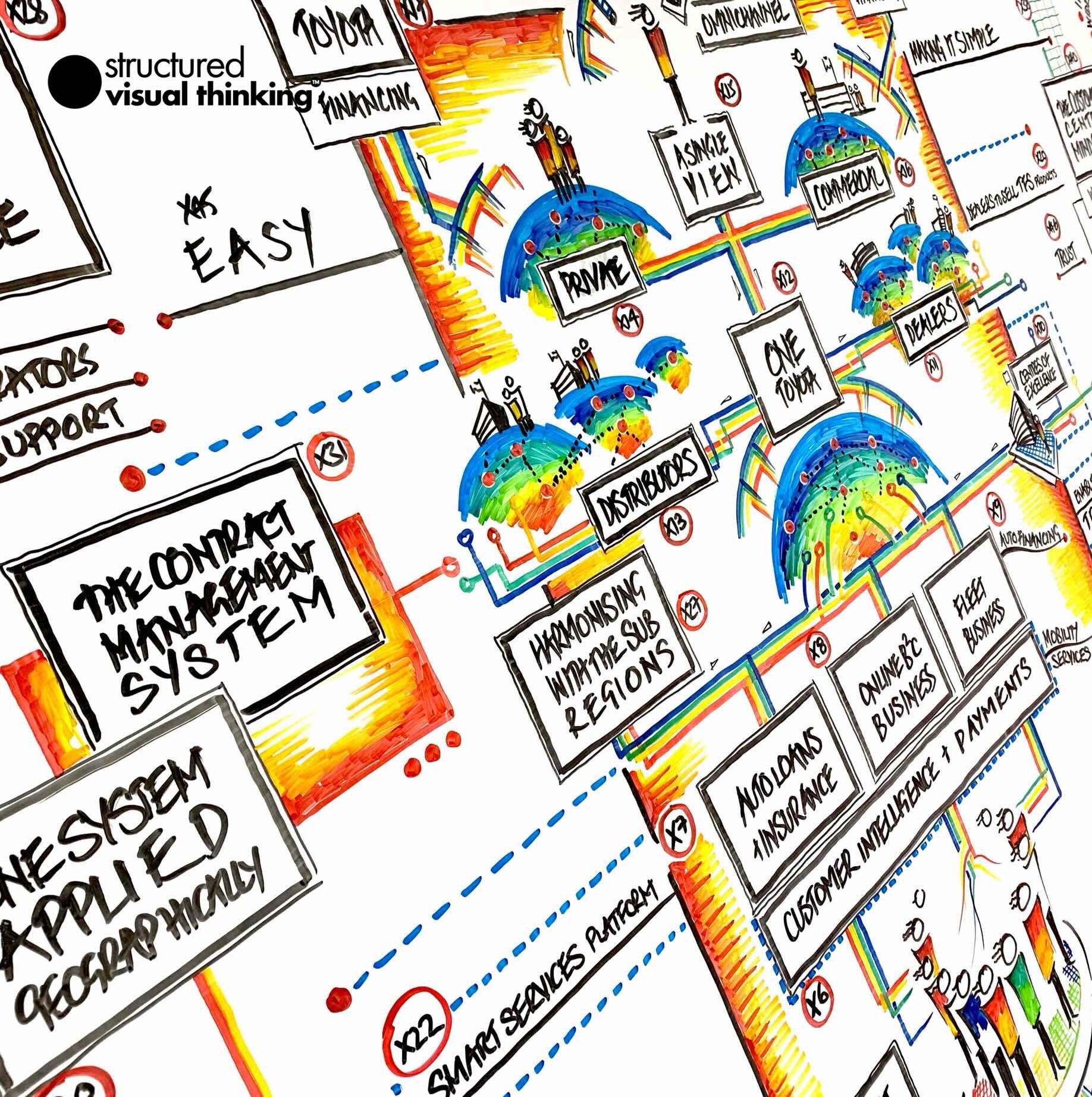
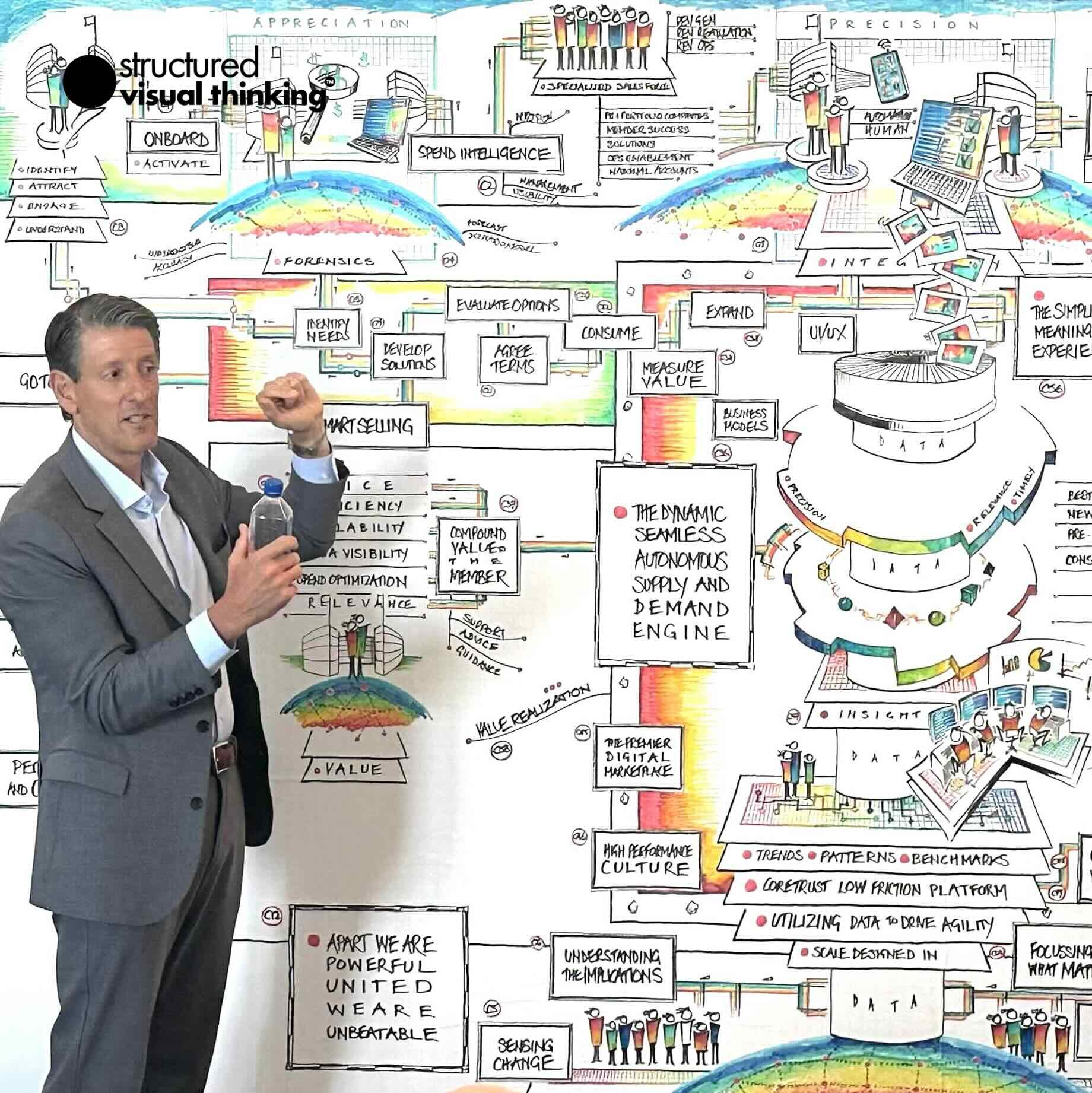
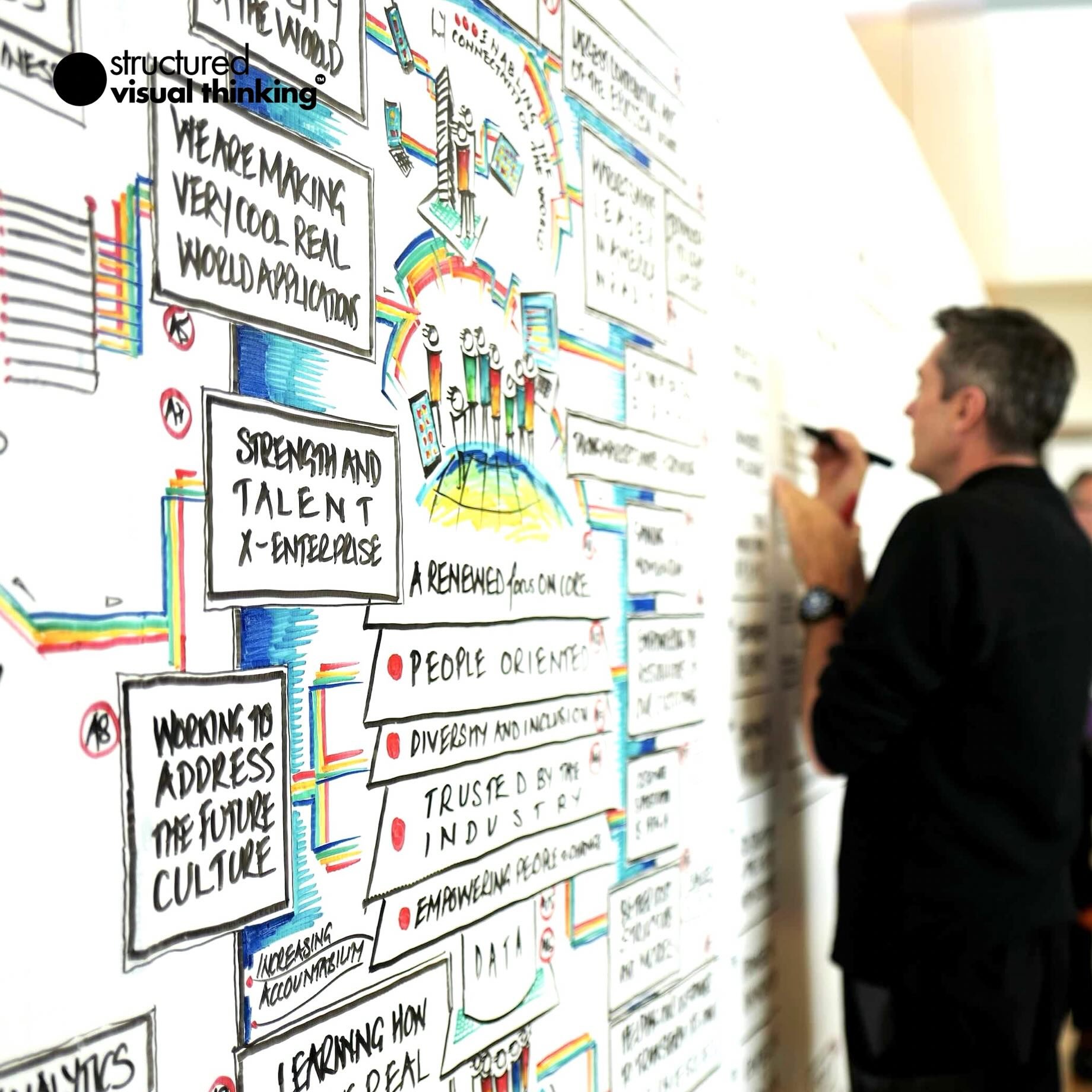
Visual means making thinking visible so it can be seen, tested, and improved by everyone in the room. Ideas, relationships, trade-offs, and decisions are mapped out in plain sight rather than hidden in slides or documents.
This allows patterns, gaps, and contradictions to surface quickly and creates a single shared reference point that sharpens discussion and speeds alignment.
-
Thinking is the disciplined act of judgement, not brainstorming or opinion trading. It is the process of analysing, questioning, prioritising, and deciding under real constraints.
Good thinking confronts uncertainty, invites dissent, and leads to clear choices and actions. It is concerned with decision quality and consequence, not elegance or consensus.
-
Framework means a deliberately constructed way of organising reality so complex situations can be understood and worked through without oversimplifying them. A framework sets out the key dimensions, relationships, and tensions that matter for a specific decision or challenge. It provides a shared mental model that guides inquiry, comparison, and judgement, while remaining adaptable as new information emerges.
A good framework does not give answers. It ensures the right questions are being asked in the right order.
-
Science refers to the disciplined use of evidence, logic, and tested methods to reduce error and bias in decision-making. It draws on established research, data, and repeatable approaches to understand how systems behave, how people decide, and where intuition is reliable or misleading.
Science brings rigour to creative and strategic work by grounding choices in what is known, while clearly signalling what is assumed or uncertain.
-
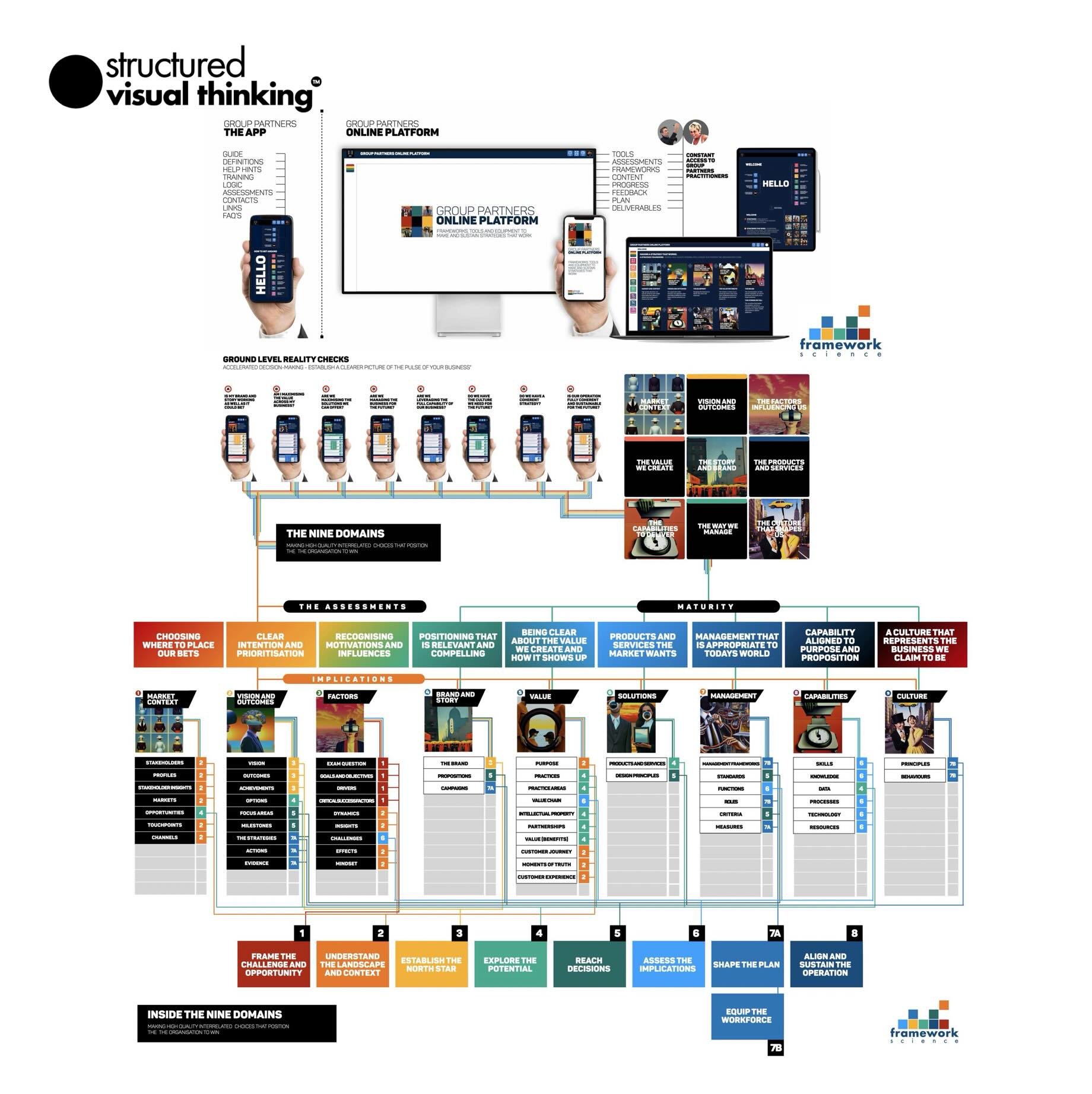
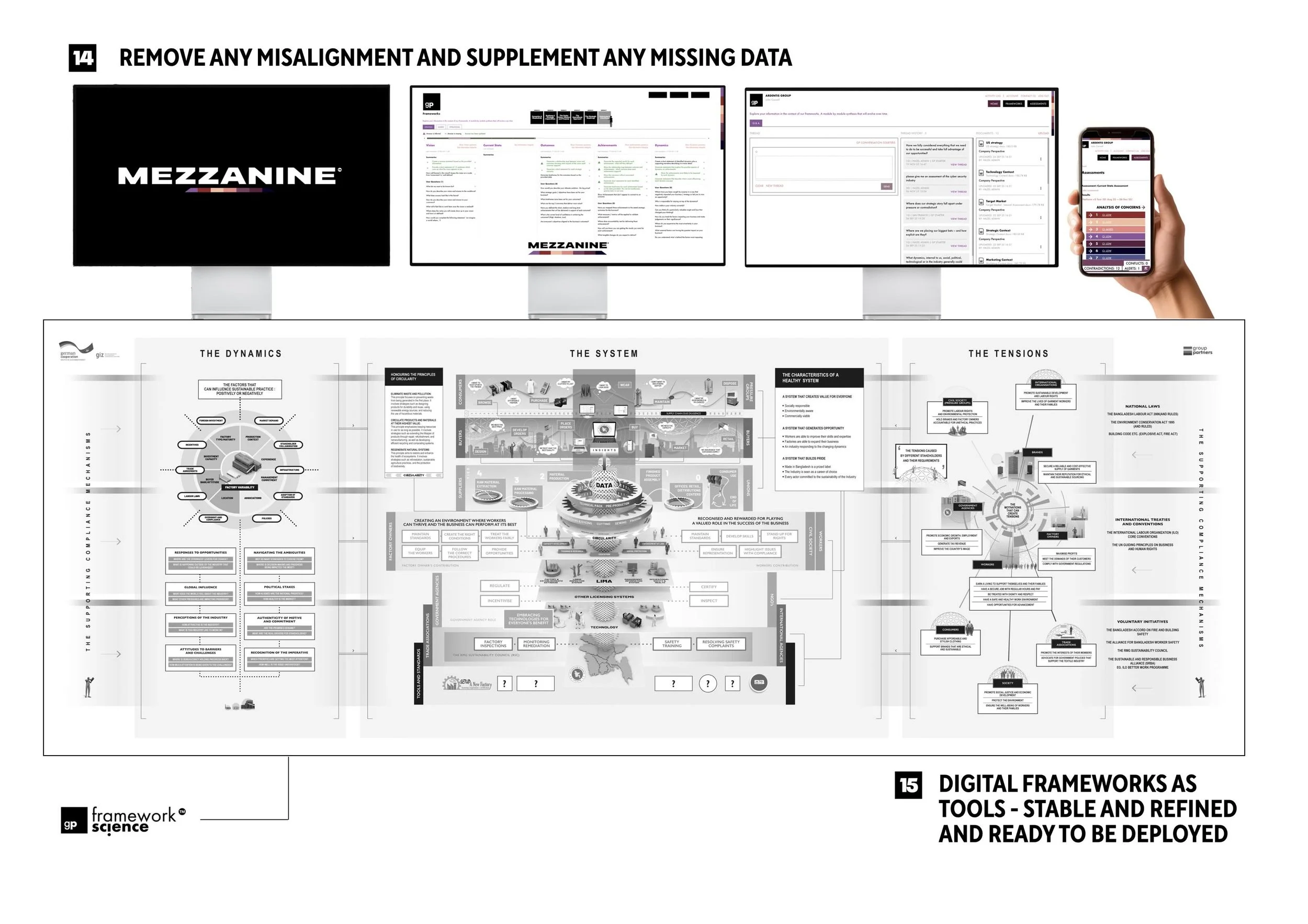
Mezzanine is the layer that holds, connects, and sustains the work over time. It captures frameworks, decisions, assumptions, and evidence in one coherent environment so they can be revisited, tested, and updated as conditions change.
Mezzanine allows thinking to continue beyond the room, preserving integrity and continuity while enabling teams to refine decisions, track progress, and maintain alignment without starting from scratch each time.
ONE: A challenge from a client -

TWO: We gather the context and agree the exam question -
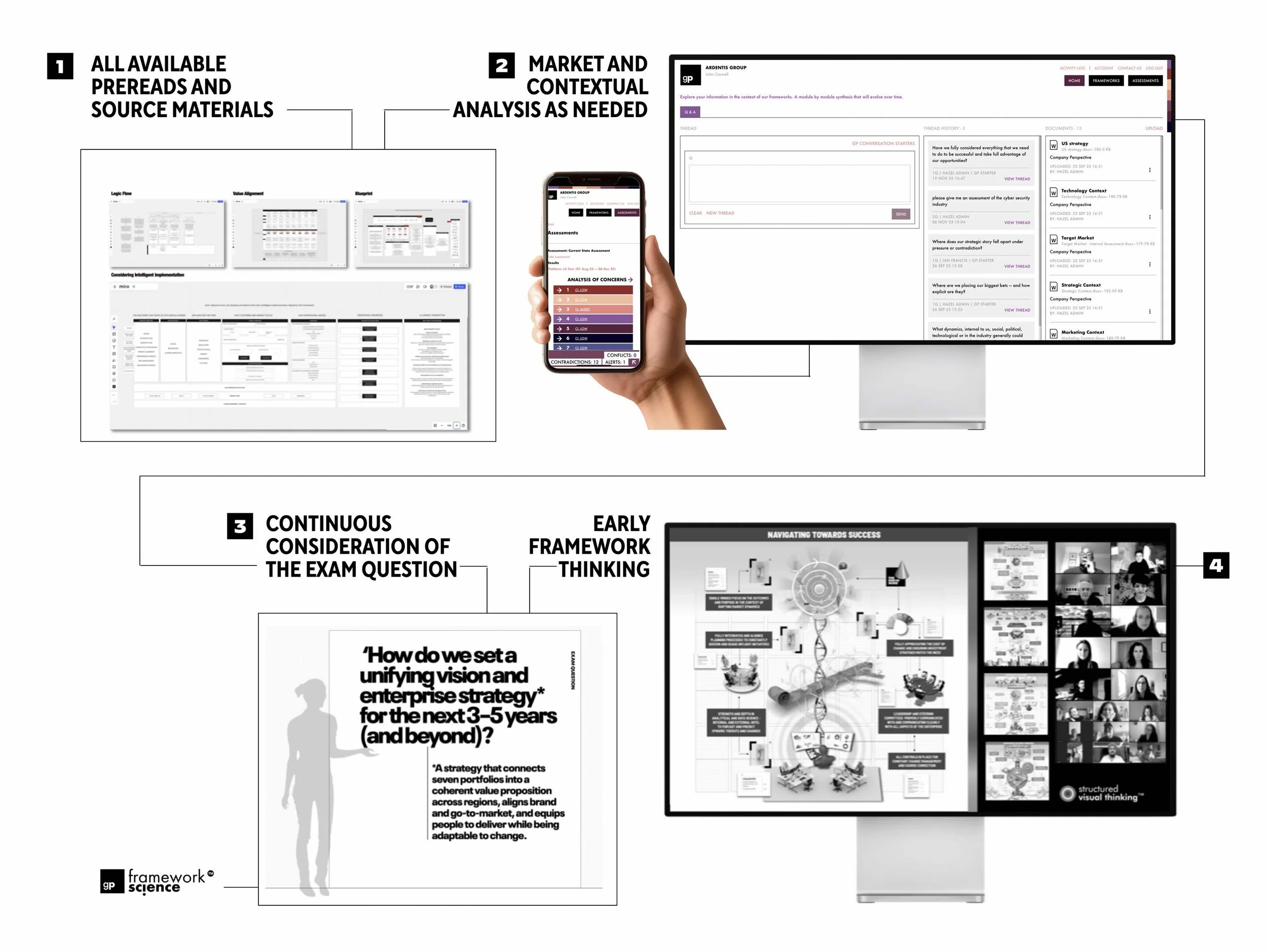
THREE: We design the conversational frameworks -
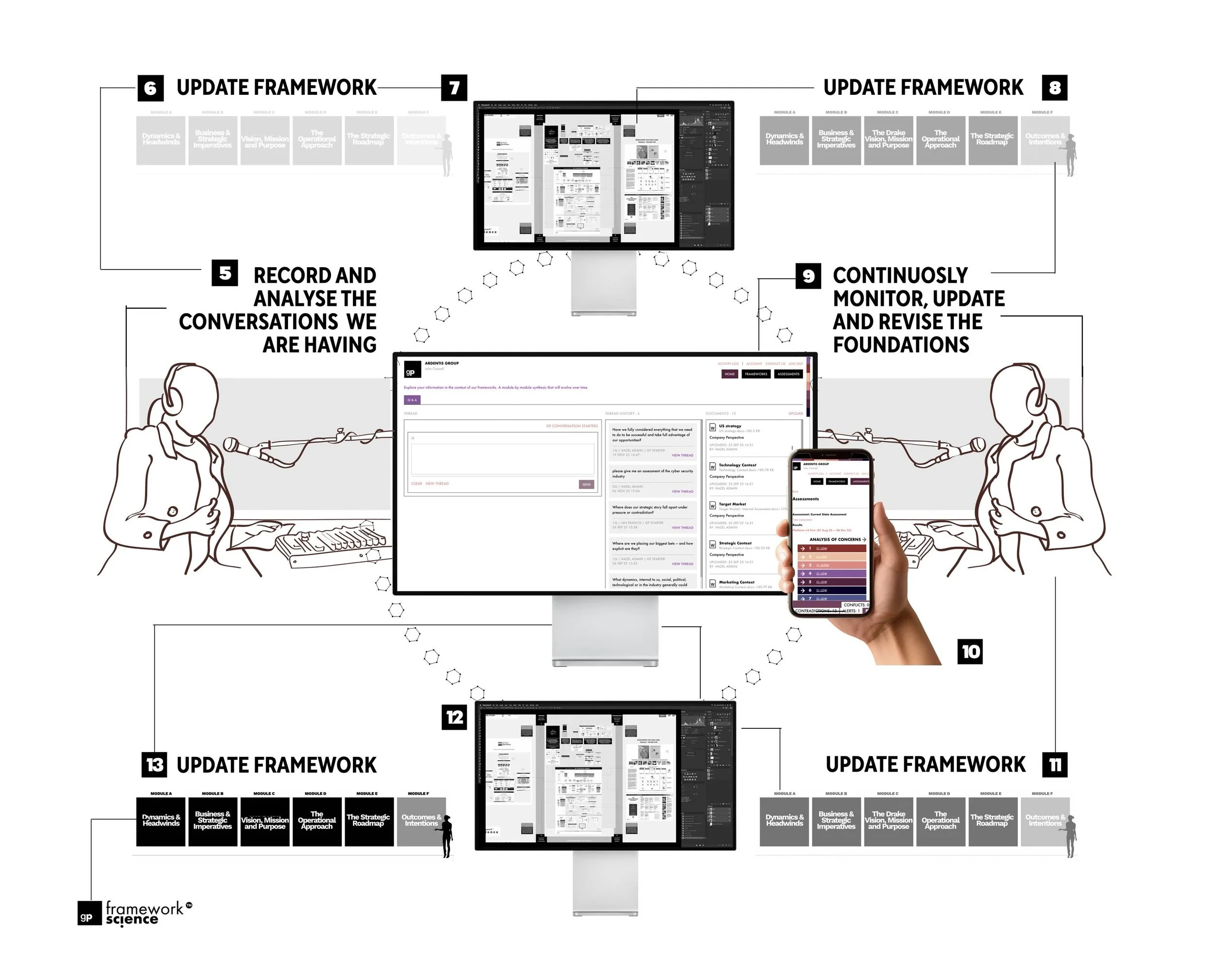
FOUR - We engage with leadership to gain alignment -
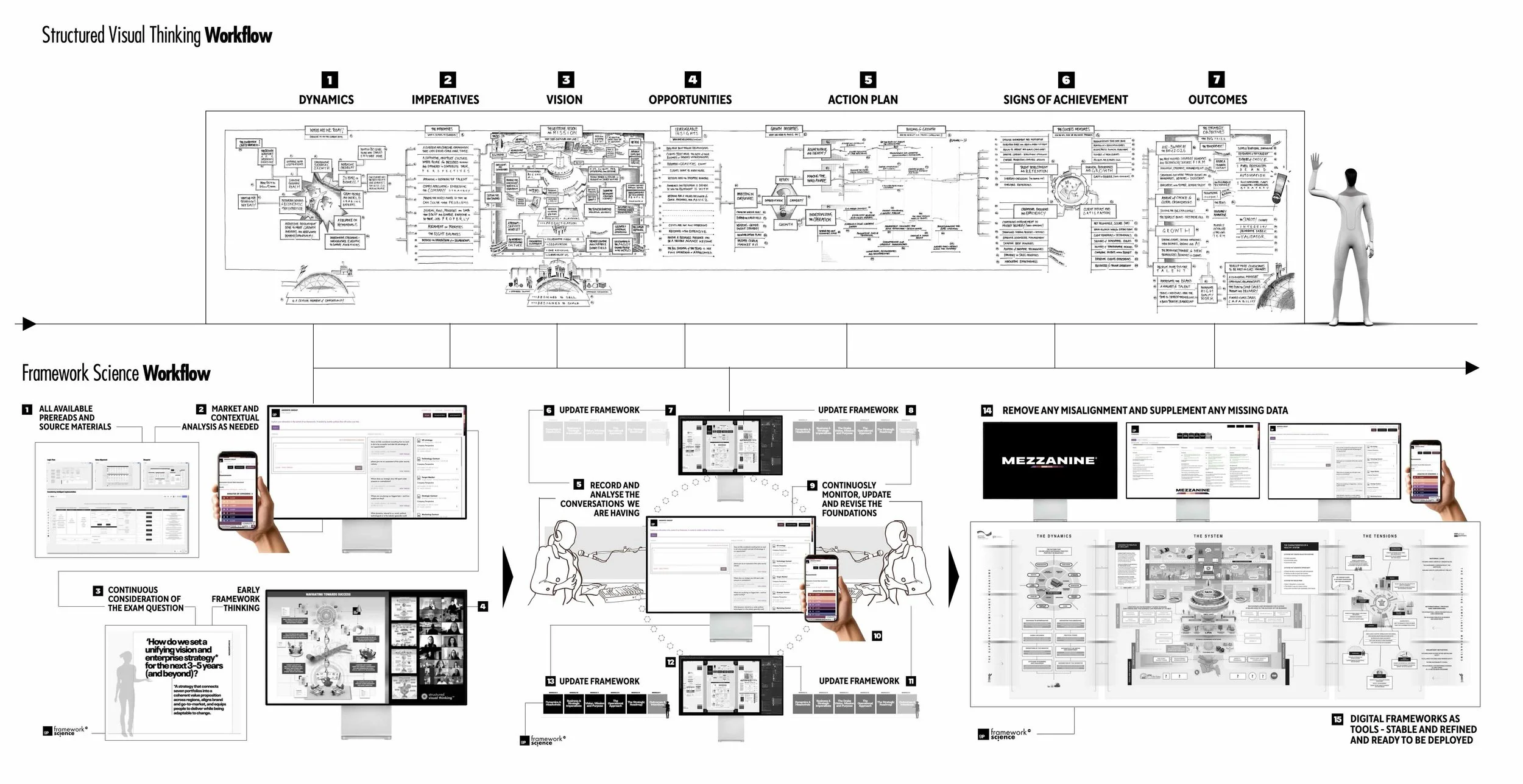
FIVE: We build tools/deliverables for sustained execution -
SIX: Explaining the hypothesis behind Phase Two
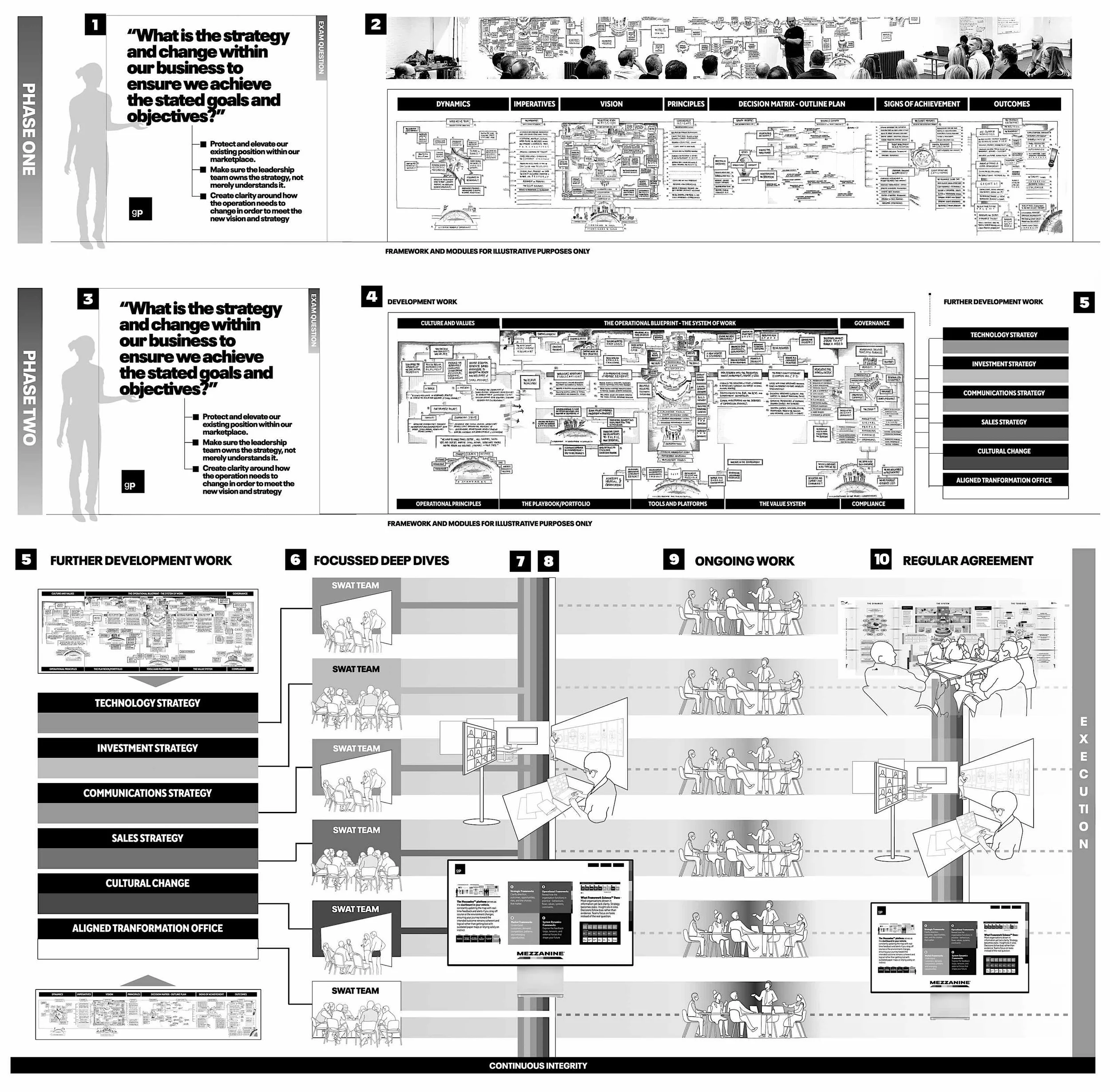
SEVEN: The platform that maintains integrity over time -
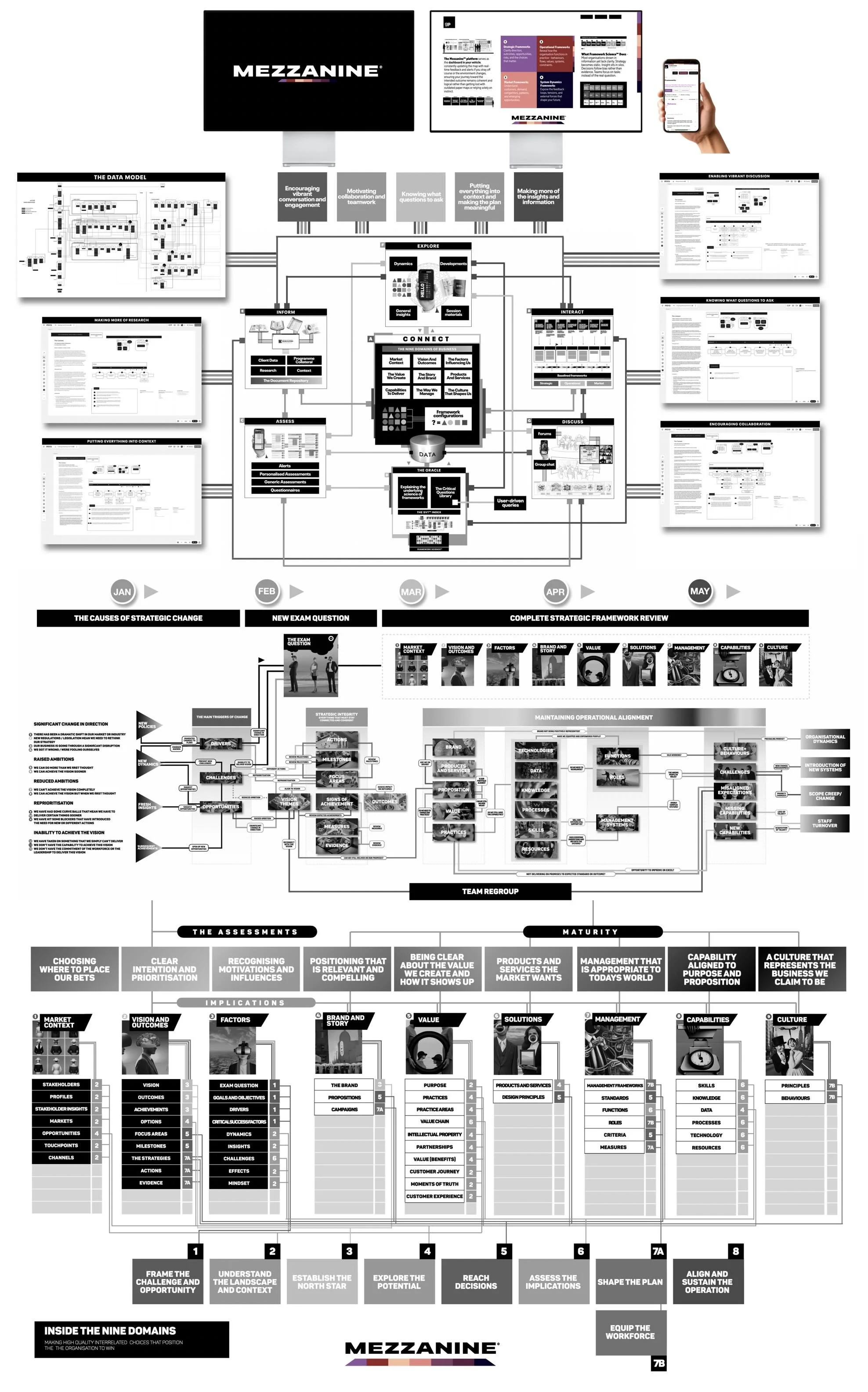
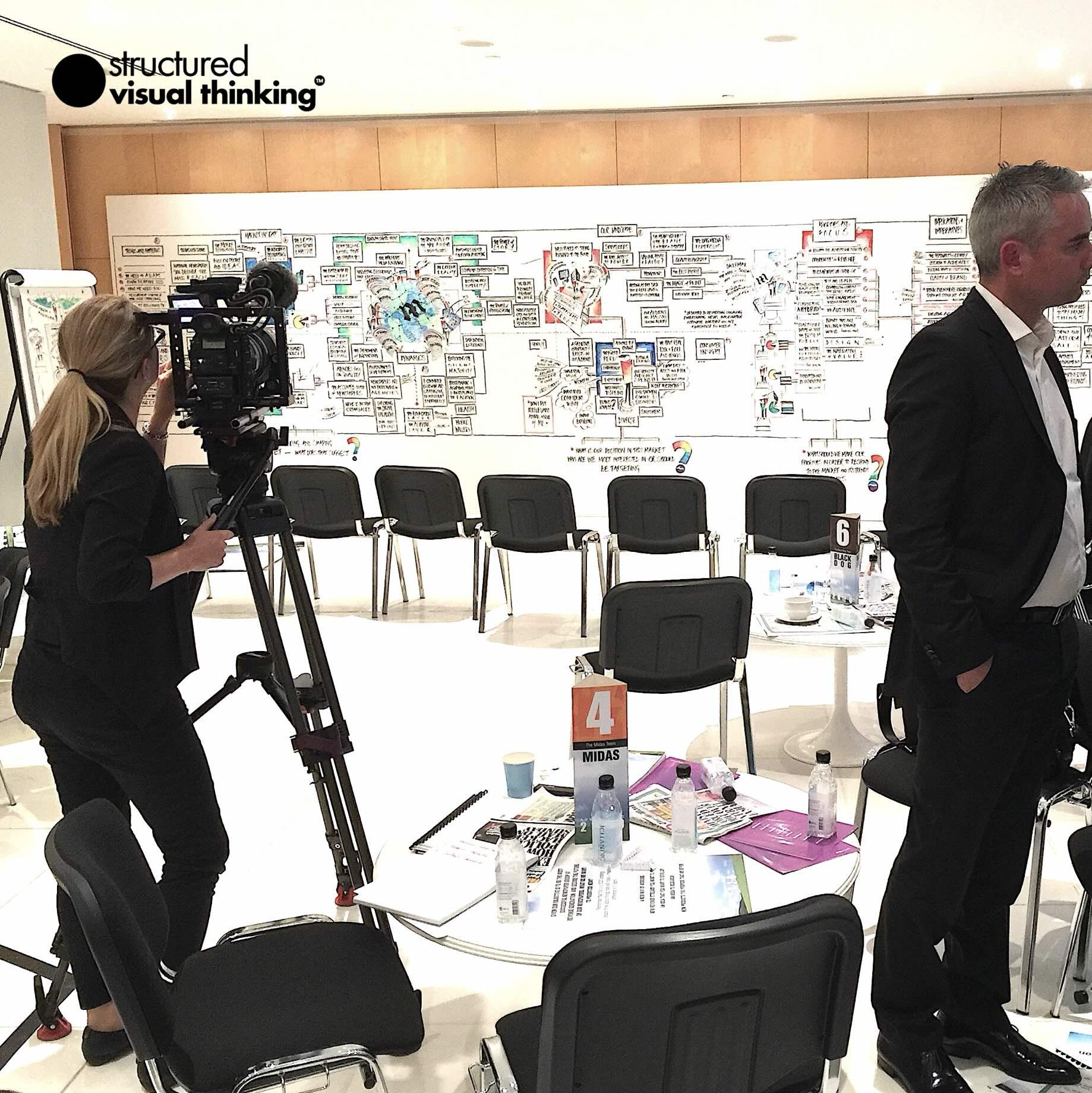
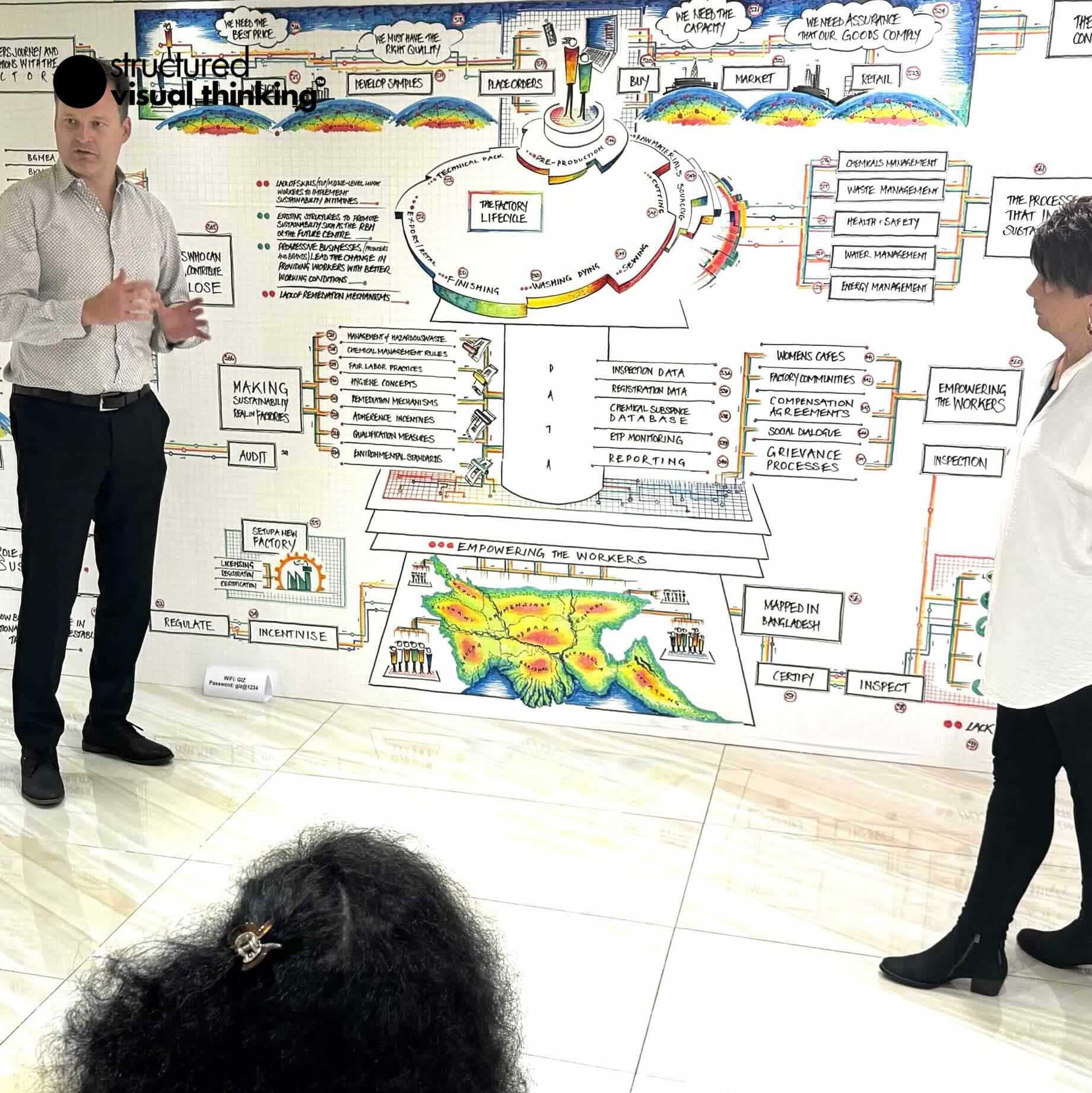
An example of the intervention part -