
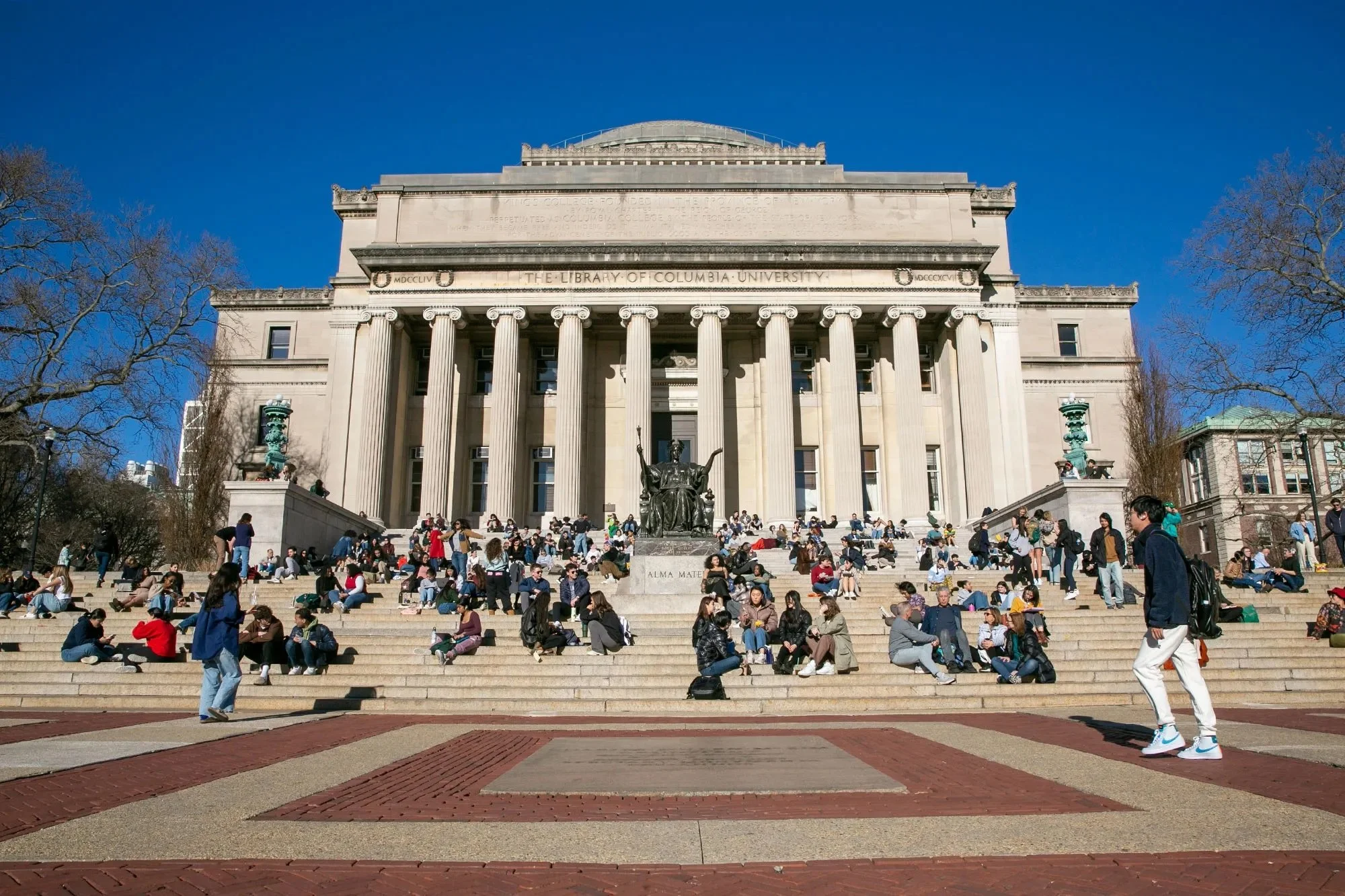
Columbia University
Columbia University — AI and the Future of Education
Welcome
Thank you for the opportunity to share our thinking. This document reflects our early understanding of the challenge facing Columbia's leadership as it considers how artificial intelligence will reshape education.
It goes beyond AI as a subject to be taught, and into a force that changes how students learn, what they need to learn, and what a university education means in this new era.

This is a discussion document.
We have based it on similar exercises and on our experience working with leadership teams navigating complex, systemic challenges in which the landscape is shifting faster than traditional planning can accommodate.
There are variables and options that will shape our next conversation.
Background
Columbia sits at a pivotal moment. AI has already arrived. It is already changing students' expectations, the relevance of curricula, the nature of research, the role of faculty, and the competitive dynamics between institutions.
The question is no longer whether to respond, but how to respond coherently and creatively, with the courage to make choices that will define Columbia's position for the next decade and beyond.
The leadership needs a way to think through this collectively, across disciplines, functions, and perspectives, rather than allowing fragmented responses to emerge independently.
The dynamics are many, and the unknowns are real, but the cost of inaction or incoherence is greater than the discomfort of confronting them together.
It all begins With The Exam Question
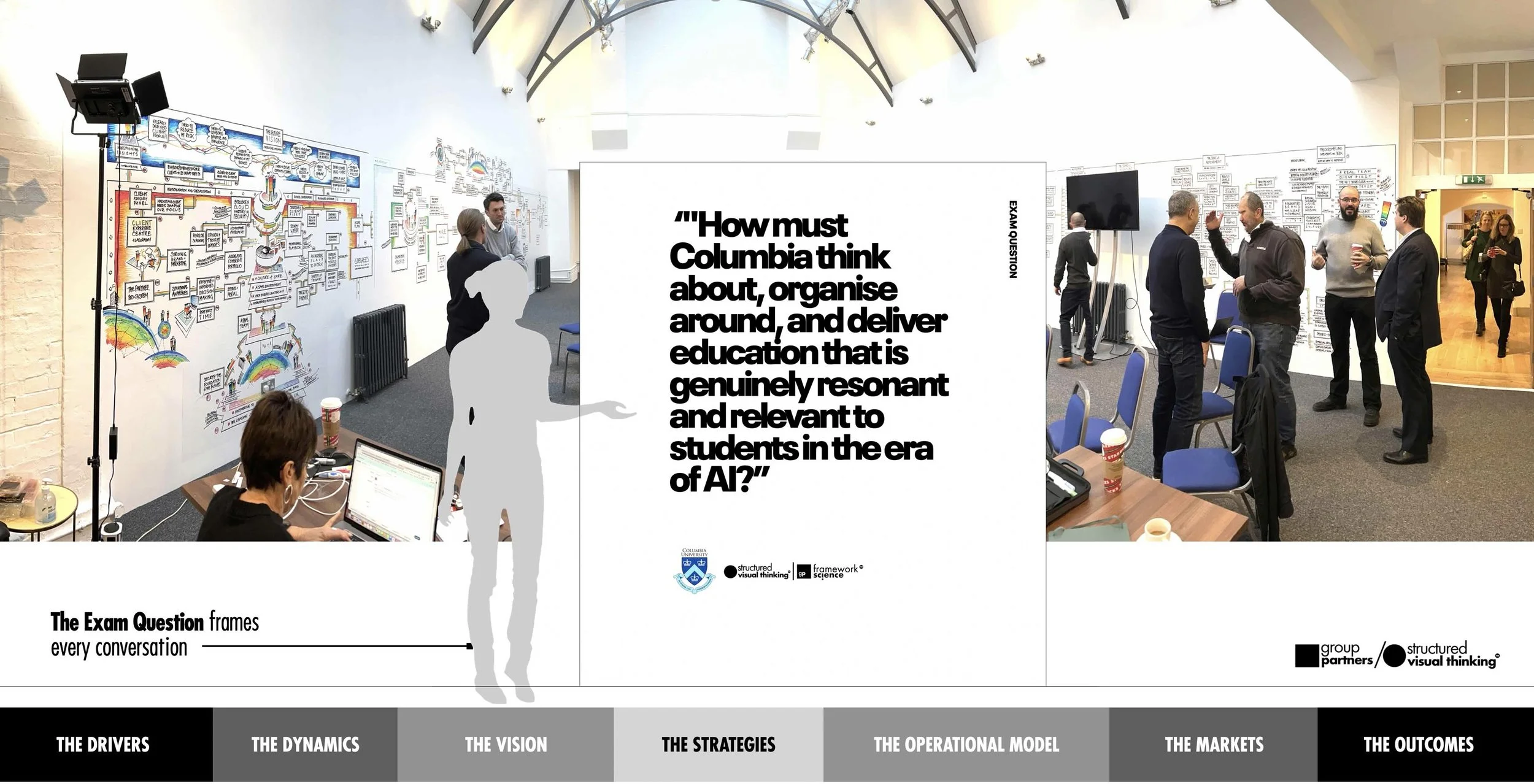
"How must Columbia think about, organise around, and deliver education that is genuinely resonant and relevant to students in the era of AI — across what is taught, how it is taught, and the value it creates for those who receive it?"
Subtext:
What does AI mean for the curriculum? Not simply as a topic but as a force reshaping every discipline?
How should AI be taught, and to whom? What does a relevant, compelling education look like when students have access to tools that can do much of what we used to teach them to do?
How does Columbia ensure it leads rather than follows?
What institutional capabilities, mindsets, and structures need to change to make this real?
We would work with you to get this right.
Our Approach — Structured Visual Thinking™ + Framework Science™
We would apply a custom strategic frameworks configured to Columbia's specific challenge.
The process is collaborative, visual, and logic-driven and built around the exam question as the organising principle. We work through thorough preparation and framing, and frameworks designed around the key topics:
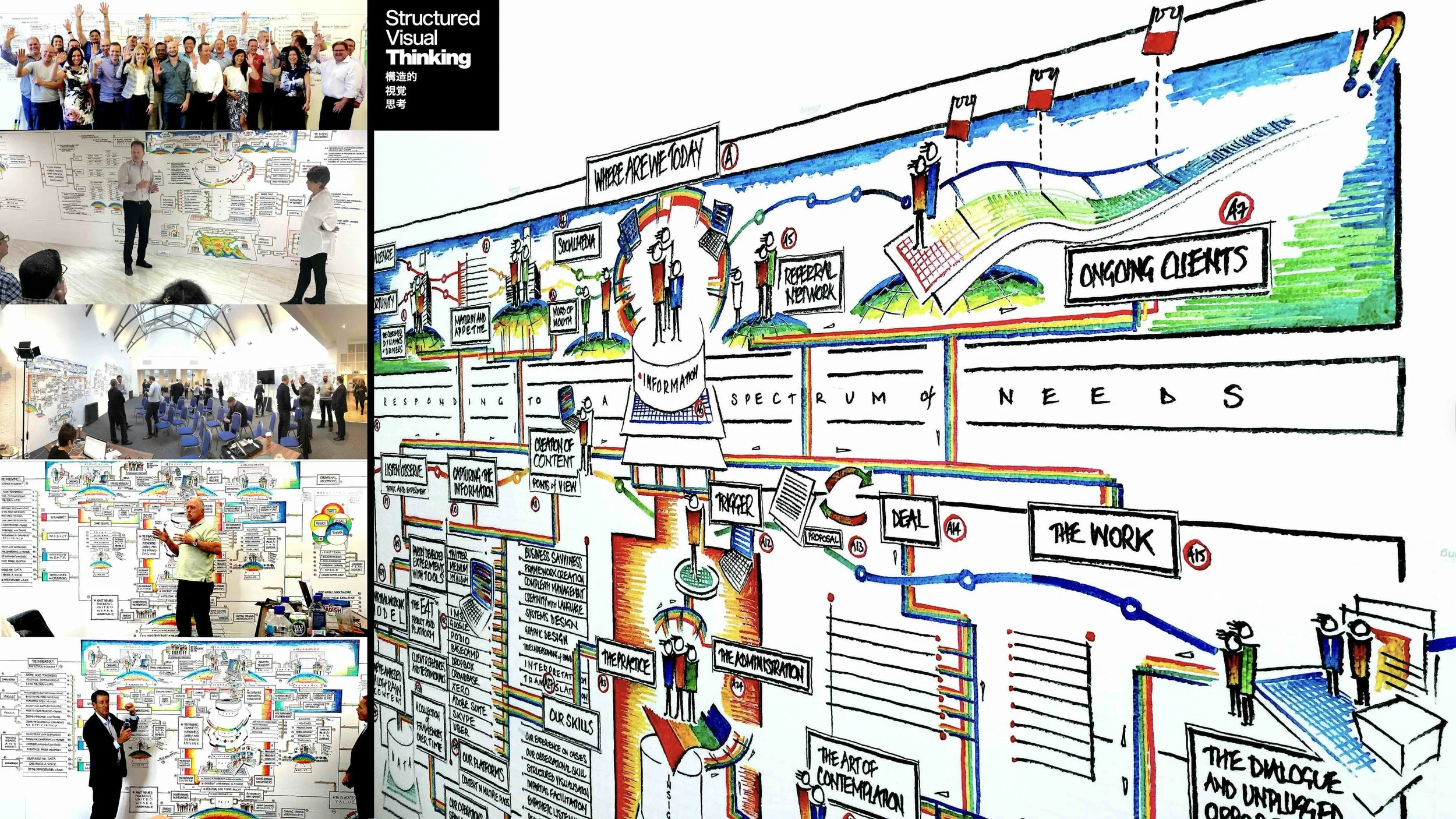
The vision for education at Columbia, the dynamics reshaping the landscape, curriculum relevance and architecture, the role of AI in teaching and learning, student expectations and outcomes, institutional readiness, faculty engagement, and the choices that need to be made.
At the heart of the programme is an immersive working session - a real-time, large-scale visualisation environment - facilitated and brought to life by us, where the leadership team surfaces perspectives, confronts assumptions, and works through the framework together.
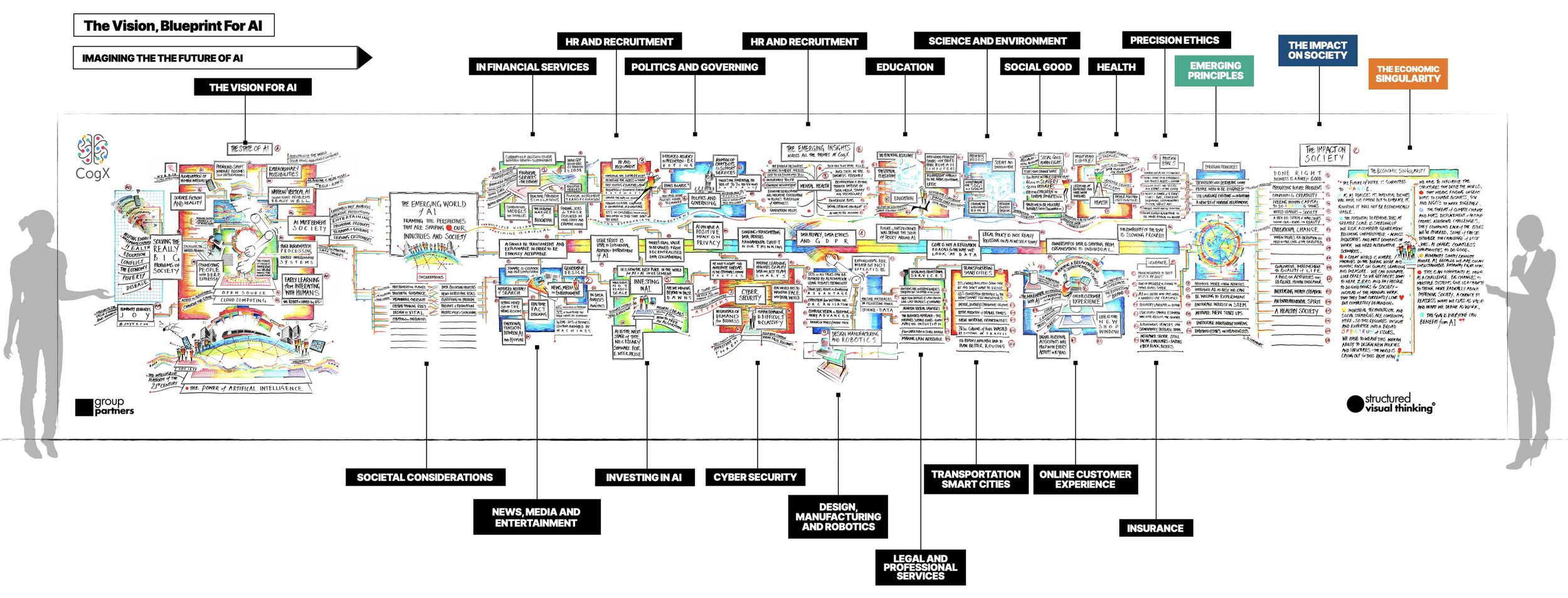
Our approach is definitely not a conference or a panel discussion. It is a structured, creative, and rigorous process designed to produce clarity, alignment, and actionable direction from what is currently a complex and fragmented set of considerations.
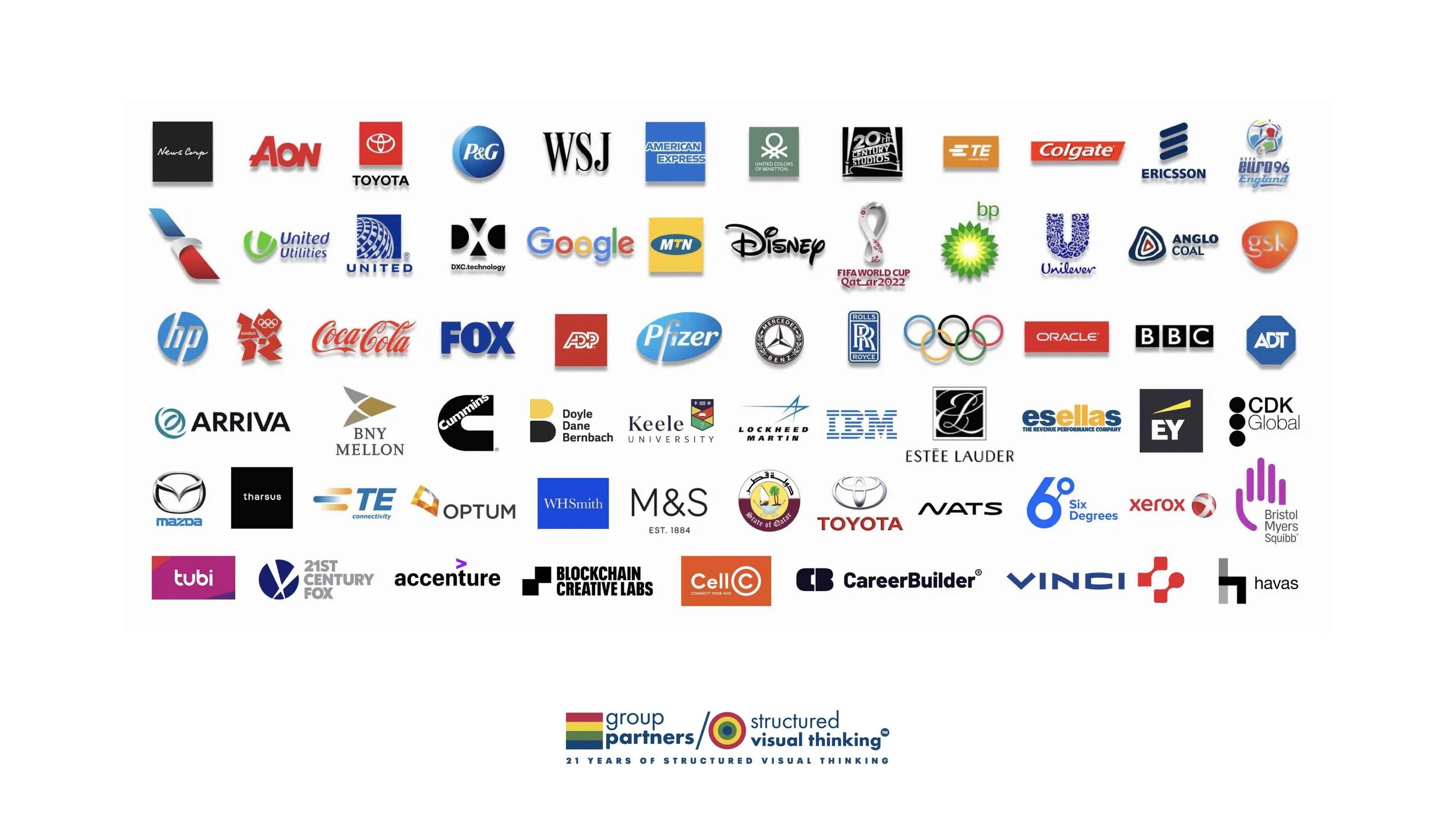
We were clients ourselves.
We know from experience that bringing the right people together in this way, with the right preparation, the right questions, and a creative methodology that makes complexity manageable, produces results that traditional planning, committees, and presentations simply cannot.
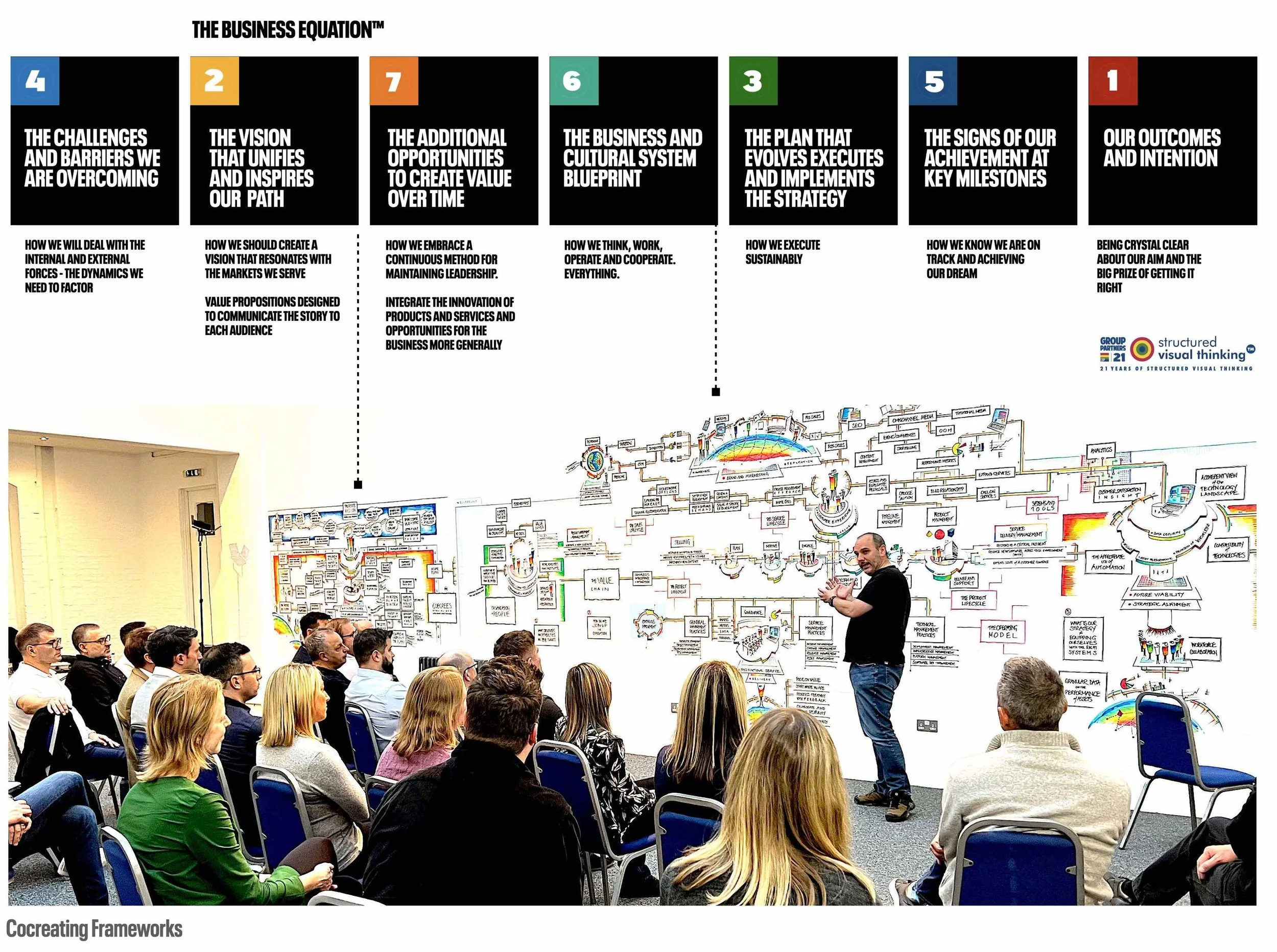
The Outcomes
Strategic clarity — a coherent view - a ‘system’ of how AI changes education at Columbia, what the priorities are, and where the institution needs to move first; a shared understanding of the dynamics, dependencies, and timing.
Curriculum and pedagogical direction — a framework for thinking about what is taught, how it is taught, and how relevance is maintained as AI capabilities accelerate; clarity on where AI is a subject, where it is a tool, and where it changes the fundamental proposition.
Alignment — leadership alignment across disciplines and functions on the direction, the priorities, and the non-negotiables; a common language and visual reference point that can be used to communicate and engage the wider university.
Tangible assets — a strategic framework (a blueprint for the future) capturing the collective thinking, narrative document, and visual blueprints suitable for communicating the direction to faculty, students, and stakeholders.
The Programme (Typical)
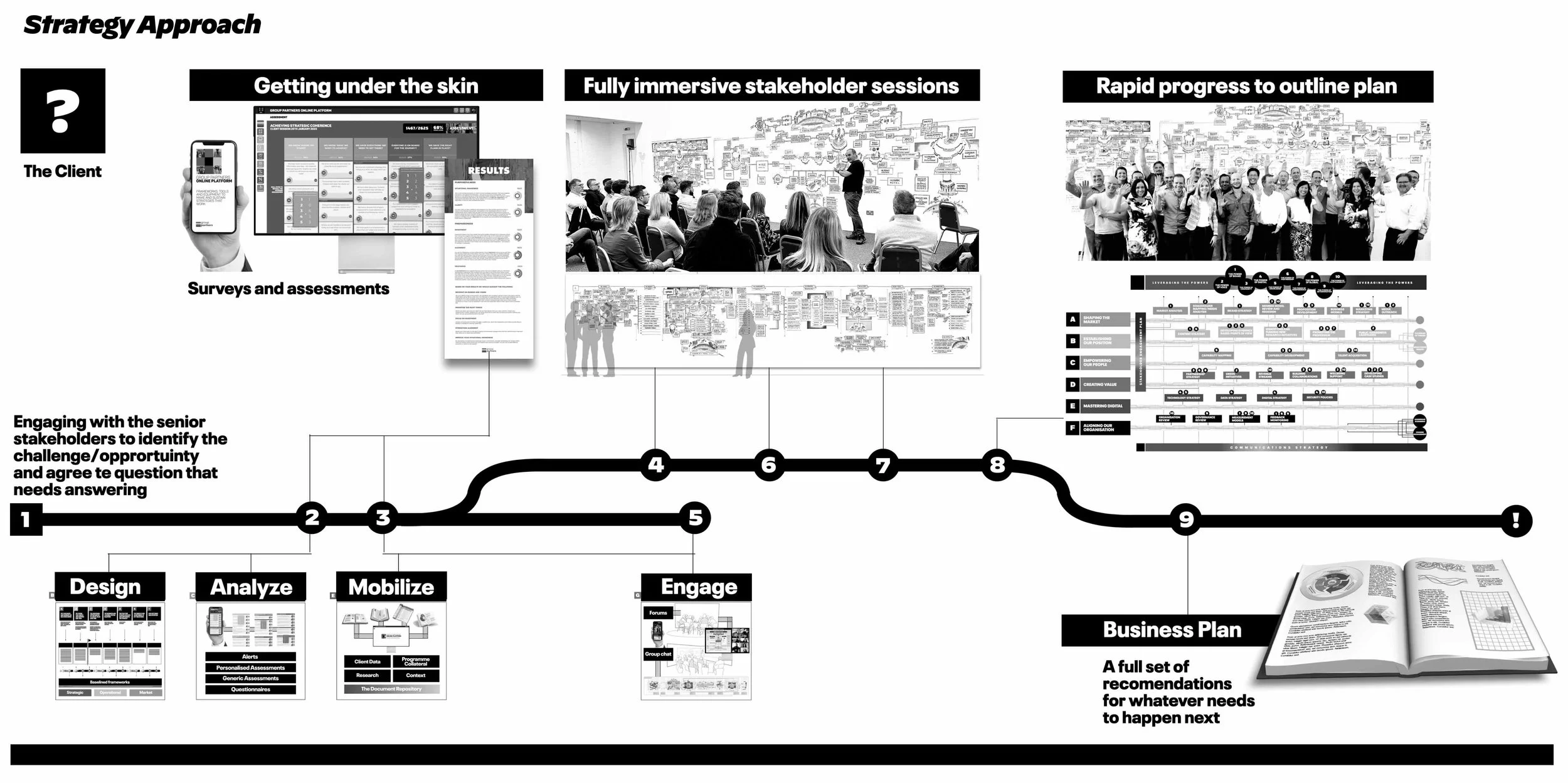
ONE: Discovery and Framing ~2–3 weeks — Inputs, interviews, review of existing plans and initiatives, research into how AI is reshaping higher education globally. Outputs: a clear picture of the current landscape, the dynamics that matter most, early framing of the key choices, and the framework architecture for the sessions.
TWO: Synthesis and Framework Design ~2–3 weeks — All inputs synthesised into a structured framework. The logic model and visual stimulus materials take shape. Outputs: framework design, draft provocations and stimulus for the sessions, success criteria, and key questions by topic.
THREE: Immersive Intervention ~2–3 days — The collaborative leadership session. Real-time, large-scale visualisation. The team works through the framework together. Outputs: populated strategic frameworks, confirmed priorities and direction, a narrative connecting vision to action, and alignment across participants. (Allow 2-3 days for rigging a suitable environment/venue)
FOUR: Activation and Handover ~2–3 weeks — Everything developed into usable assets and transferred. Outputs: strategic narrative, visual frameworks at full resolution, summary of choices and rationale, communication tools for wider engagement.
Commercial
A fixed-fee programme covering all four phases. Led by John Caswell, Hazel Tiffany, supported by the team and GP studio. Includes all framework development, facilitation, visualisation, digital assets, narrative materials, and handover.
[Fee to be discussed] — Travel, accommodation, and venue costs at cost by prior agreement.
Payment: 30% on engagement / 40% at completion of immersive intervention / 30% on final handover. Fixed-cost basis — we are invested in the outcome, not the days. Terms: 30 days from invoice.
Group Partners — The Home of Structured Visual Thinking™ john@grouppartners.net | +44(0)7920 759250 | www.grouppartners.online