Group Partners

Inside GP

Group Partners

What makes us tick? What makes us different?

Find out all about us here, and ask your questions directly.

  • Ian Ryder
  • Amanda Bravo
  • Sonja Kresojevic
  • Nicole Yershon
  • Nigel Rushman
  • Kevin Hoffberg
  • Rob Wirszycz
  • Nicoletta Iacobacci
  • Mark Huxley
  • Alison Norrington
  • Sandra Macleod
  • Ian Francis
  • Hazel Tiffany
  • Sarah Ann Sabner
  • Angie Moxham
  • John Caswell
  • Dr Mary Poffenroth
  • Mike Yershon
  • Chris Donato
  • Andrew Morgan
  • Johnathan Badenhorst
  • Leighanne Makrygiannis
  • Jeremy Baker
  • Paul Woolf
  • Kerry Marks
  • Alan Turner

What makes us tick

Group Partners has worked on hard questions since 2001. We start by finding the right question, because a good answer to the wrong one helps nobody. We draw the thinking out so everyone in the room can see it, using Framework Science and Structured Visual Thinking. If there are gaps, we bring in experts from a network built over decades. We stay until it holds.

  • Rolls-Royce
  • HP
  • BT
  • International Olympic Committee
  • BBC
  • IBM
  • Google
  • Unilever
  • P&G
  • Pfizer
  • American Express
  • Bristol-Myers Squibb
  • Mercedes-Benz
  • WH Smith
  • Marks & Spencer
  • Capgemini
  • MTN
  • Coca-Cola
  • Toyota
  • BP
  • Disney
  • Oracle
  • GSK
  • Ericsson
  • Ian Ryder
  • Amanda Bravo
  • Sonja Kresojevic
  • Nicole Yershon
  • Nigel Rushman
  • Kevin Hoffberg
  • Rob Wirszycz
  • Nicoletta Iacobacci
  • Mark Huxley
  • Alison Norrington
  • Sandra Macleod
  • Ian Francis
  • Hazel Tiffany
  • Sarah Ann Sabner
  • Angie Moxham
  • John Caswell
  • Dr Mary Poffenroth
  • Mike Yershon
  • Chris Donato
  • Andrew Morgan
  • Johnathan Badenhorst
  • Leighanne Makrygiannis
  • Jeremy Baker
  • Paul Woolf
  • Kerry Marks
  • Alan Turner

Good Questions.

Ask us anything. These are the questions people ask us most, and how we would answer them across the table.

Ask your own question

What does Group Partners actually do?

We help clients find the real cause of a challenge, then give them the confidence to think through the opportunity by widening the context.

It is a co-creative process. We take in all their intelligence and information and understand their place in the market. Our decades of objective learning get them up the curve quickly. We work visually and with structure, so the real clues in their situation come to the surface.

Then we hand over the tools and techniques, so they can sustain the future of the business without leaning on anyone with an agenda of their own.

Too many advisers are more interested in selling their services than solving the problem. I know, because I was a client. Most of us, across the expert network, come from the client side. We want to give clients back their agency.

What kinds of problems do people bring you?

Often they've had a poor experience with a strategy firm and want to go again. Or a challenge has defeated them, and they know it has to be fixed.

Some are mid-transformation. Some are new CEOs who need a fresh vision and operating model. Many are wrestling with what AI and new technology are doing to them.

Others are losing to the competition or lack a clear story, sometimes because they can't see the category they're in. Some want their people far more involved in shaping the future, or want a leadership retreat that is livelier than the usual.

Underneath, there's usually a hard question. Which direction to take and which bets to place. Where to invest and which markets to enter, and how to scale. How to change the culture or the story, how to win more in sales, even how to sell the company.

What makes a good question?

A good question is open. It goes to the core of the challenge or opportunity, and it never tries to answer itself.

It comes out of context. We gather the information and do the research first, so the question is asked in the right place.

Then it brings people in. Every stakeholder around it has a part in answering it, and room to hold a strong opinion. A good question leaves little room for subjectivity. We bring the objectivity through the right conversations, worked out with Structured Visual Thinking and framework science.

What is the exam question?

The anchoring question that describes the challenge without answering it.

Why do strategies fail?

Strategies fail because people bring old prejudice and legacy thinking to a world that has changed.

A strategy is a series of plans and decisions in pursuit of an outcome. When the outcome is unclear, nobody is brought into it. People cannot see what it will take, so their decisions come out incomplete or second best.

Put a senior team together to answer it and they fall back into their silos. Processes and systems get in the way, but mostly it is mindsets. Leaders find it hard to pull them back.

We have huge sympathy. We were clients too, and we know how hard it is to stand at the right distance from your own problem. Most failed strategies come down to a series of bad choices made without good conversations.

How are you different from the big consulting firms?

We work at the level of the leadership team, developing its strategy, and our mission is to hand that critical thinking over to them. We don't sell bodies or hours, so we cost far less.

No volume of consulting hours will show the systemic nature of a problem visually. What we bring is creativity and judgement drawn from close to a thousand client cases around the world.

I've bought consulting myself. Too often the model was to outsource the thinking and wait for the answer. It came back so dense that, where change really mattered, nobody in the organisation could understand it.

We are more practical and down to earth. We often work alongside consulting firms, and several are on our client list. When their message isn't landing with a leadership team, they bring us in. We respect them enormously, and we do something very different.

Creativity, for me, is solving problems by connecting the dots. Connect some and you are guaranteed to fail. Connect all of them and people engage and take ownership, because they see connections they would never have made.

Storytelling and engagement are part of that, and they are what business is. A leader who can't tell the story has no followers, and that is the first test of leadership.


What does working with you actually look like?

It feels like a conversation with good friends. We make it easy to talk openly, with energy and real insight, and we design the meetings and spaces so teams create together.

The work runs to a short, sharp cadence, typically 8 to 12 weeks depending on the exam question.

It starts with discovery. We always do the research first, so we never turn up without knowing enough to be useful. Then comes development, as we get ready for the sessions.

In the sessions we use Structured Visual Thinking live. The team sketches the whole picture together at scale, on surfaces up to 100 feet long that we prepare rigorously beforehand. Clients come in for one to three days and marinate in it, seeing how everything connects to the outcomes they want.

We always finish by handing over the capability. The insight and the tools stay with the client, so they can carry the work on together without us.

What is Structured Visual Thinking?

A mindset with a logic. It is how we facilitate the thinking needed to build a strategy, answer a question and realise a future everyone can see.

Each word matters. Structured, because unbounded thought is hard to follow and misses opportunities. Visual, because we absorb what we see far faster than what we hear or read. Thinking, because people don't do enough of it.

If we stop thinking, we stop growing. If we stop being visual, we bore everyone to death with decks and documents and nothing gets done.

In business it is the fastest way we know to get everyone literally on the same page and seeing the big picture. People read less than they used to, and attention is scarce. For strategy, change and go-to-market plans alike, Structured Visual Thinking's time has come.

Why does visual work better than a document?

Because seeing transfers information far faster than words. To see something is to understand it, and we've spent decades making ever clearer diagrams and infographics of abstract ideas.

Write down how to tie a shoelace and you'll tie yourself in knots. Show someone a diagram and they'll probably figure it out.

What is a blueprint?

A map of the entire operation, rather like an engineering blueprint. It shows everything that needs to be built, with the relationships clearly drawn. We like the word because it evokes that rigour.

We make them visual and easy to read, but they hold all the information needed to build the future operation. Usually it is enterprise-wide, and we often nest several blueprints together to show different views, the way an engineer draws a plan and an elevation.

What is Mezzanine?

Mezzanine is a development programme more than a decade in the making. It began when we noticed the same patterns and principles turning up across our conversations.

So we built a system around them. It gives the leadership team a place of its own, where the Structured Visual Thinking work lives: outcomes, visions, operating model, culture, plan and imperatives. They can see the whole of it from the inside.

It sits alongside the many systems a company already runs and replaces none of them. Today AI does much of the heavy lifting, summarising and connecting complex information through a knowledge graph. None of that existed when we started.

It is optional. Many senior teams carry the strategy forward on their own, and that is fine. Where a client wants us, we stay on as observers with a view into the system, and we help keep them honest. If a new piece of information threatens a significant decision, we act as a gate and push back politely: that does not fit, and here is why, so let's have another conversation.

It keeps a strategy alive and moving, without constant dependence on outside consultants.

What is an unplugged assignment?

It comes early, when a client wants to brainstorm with no fixed agenda. It's completely blue sky, and a wonderful place to be.

I call these salons, or unplugged sessions. We leave the full kit behind, bring our creative selves and simply riff. We bring in the people from our expert network closest to the challenge, to add stimulus and provocation.

Who is in your expert network?

People we've met over the last 20 or 30 years. We've worked with them and trust them, and clients like them because they fill a gap in the talent a job needs.

It's a partnership. They often bring us into their own assignments, so we know them up close. They deal directly with the client, so we never charge a markup on an expert. Having been clients, we don't like a markup with no value attached.


They range from storytellers and behavioural scientists to AI ethicists, and specialists in law, finance, growth investment and insurance.

How do you use AI in your own work?

AI is an incredible tool. It gives us access to far more information than we can hold in our heads at once. We use it to augment our thinking, never to replace it.

It helps us research and summarise, add order and structure, and come at information from new angles. It speeds up our route to a hypothesis.

But AI is the sum of everyone else's thinking. We put our own critical thinking on top of it, and that layer is the part that is ours.

How do we get started with you?

Usually with a simple call. Often we're referred, as CEOs pass our name to other CEOs. Our whole business is built on having the right conversations, so that's where we start. We're happy to put forward a proposal for how we might help, and if we don't think we can, we'll tell you.

Can you work with us remotely?

Yes. We prefer to be in the room, because working in person gives a human connection that is hard to match on screen. We worked remotely right through COVID, though, and every assignment has remote work in it, so we keep travel and cost down for the client. If the question really needs us in person, we will say so.

What do we walk away with?

It depends on the exam question. Helping a client through a transformation is very different from helping a leader who has lost sight of the vision.

Typically you leave with fresh energy for the challenge ahead. You have a clear vision and an agreed set of objectives, the principles and roadmap to reach them, and a sense of how your purpose and mission connect to those goals.

Above all you have a story to tell your next line of reports. The deliverables are visual, often interactive, and pitched so each tier of the organisation hears it in its own language.

When I was a client, this is what I wanted. The firms we hired had little interest in helping us put the thinking to work, and their complexity was hard to turn into anything clear enough to use.

What happens in the weeks after the sessions?

We follow up soon after, to make sure everything is heading in the right direction.

Right now we have clients around the world who ask us in for catch-up calls, so we can help them stay honest in pursuit of the vision and strategy we built together. It all serves to keep the thinking fresh and the work alive.

It's easy to slip into old habits. Not because people aren't smart, but because the day job takes over. Again, this is at the client's request. We're not trying to create a dependency on us.

How do you measure success?

There's no single metric. Success is our work turning into growth and return on investment, and clients who are glad they called.

Sometimes it's specific. If a CEO wants to know how well the first line of reports is doing, we measure it that way. Often it's money not wasted: we've saved clients millions by helping them see they were about to invest in exactly the wrong place.

We look for alignment, with no disconnect in the leadership team, and for a jaded group finding new hope in a vision. Sometimes success is challenging a client kindly enough that they never feel disrespected, but stop before they drive off a cliff.

Every context has its own measure. Get in touch and we'll find yours.

Who do you work with, and where?

Every industry, all over the world, and we'll travel to almost any country.

We work with leadership teams and their proxies, and there is always a decision maker in the room. Increasingly we also work with the champions and ambassadors a company is bringing through from its wider workforce. In short, whoever is closest to answering the exam question. Sometimes that includes external partners, consulting firms and agencies.

We won't work with organisations that work against society, a cigarette company for instance, or any business that has shown it isn't on the side of ethics.

Do you work with smaller companies and start-ups?

Yes, and we love it. Start-ups want to avoid the mistakes big enterprises have made, and that's where we can be most valuable. We're drawn to the leading edge of change, in technology, culture, society and institutions.

Small companies are the heartbeat of big ones. Every big company was small once, and most wish they still were.

Why the name Group Partners?

At WPP I was one of some 80 companies in a holding group that rarely worked together. They would kiss and punch, as the saying went, and partnering was hard. When I left, I chose two words that said what I wanted to do instead.

Group, because we facilitate groups of people. We bring individuals together in a co-creative space where value emerges and innovation happens. It can be ingenious and challenging, and it's fantastic.

Partners, because we don't want to be a big agency carrying overhead and cost. We partner with the groups we work with, and with our network.

What is your book about?

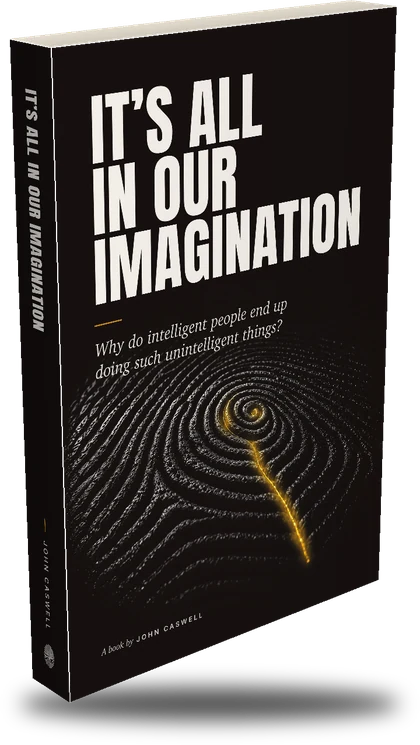
It's All In Our Imagination is the story of a lucky life. Good parents, technology at its very beginning in this country, helping build the microcomputer industry, starting an ad agency, falling out of love with holding companies and selling it. The book is about the lessons learned along the way.

Its argument is simple. If we keep outsourcing our thinking to AI and new technology, and live at the beck and call of social media, we ignore what makes us human, and we do so at our peril. The shortcuts of automation must not take away our creativity, our imagination and our judgement.

That means heart and soul, the right conversations, and refusing the slop that comes from people not thinking or not caring. It also means resisting platforms built to spread division and lies.

Above all it's a positive book. It reminds people there is real joy in taking a walk, going fishing, learning a craft or reading, in thinking differently, and in not being steered by organisations with vested interests.

Ask us anything.

Put your question to us. Answered from four decades of our work.

Ask us

Prefer a person? Leave your name below

Ask us.

Four decades of work, in our own words.

Every question starts
with a good think.

We hear the question first. Then we bring in the people it needs.

We’re not body shopping. We’re not trying to create a dependency on us.

A question at the centre of the expert network, with a small team drawn in for it Storytelling Decision-making Goto market Programmedelivery Teamdynamics 010203

Meet the Expert Network

The questionEvery piece of work starts with a good question. We hear it first.

  1. 01The question. Where every piece of work starts.
  2. 02The network. Senior specialists we have trusted for over twenty years: storytelling, film, media, technology, brand, reputation, turnaround and more.
  3. 03The team. A few drawn in for the question, stood down when it is answered.
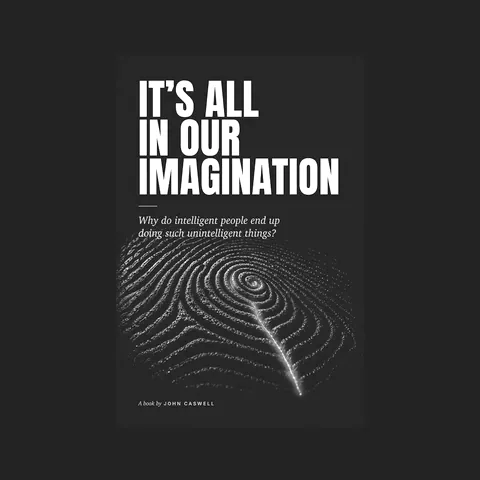
It’s All In Our Imagination by John Caswell, standing, showing the front cover and spine

It’s All In Our Imagination

Why do intelligent people end up doing such stupid things?

a book by John Caswell

Coming early 2027

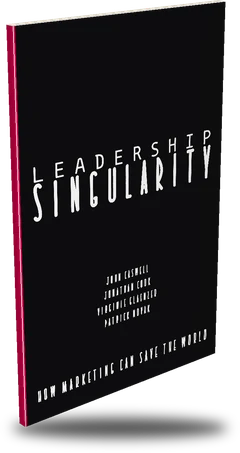
Leadership Singularity, standing, showing the front cover and spine

Leadership Singularity

2020. John Caswell with Jonathan Cook, Virginie Glaenzer and Patrick Novak

How marketing can save the world. New business craftsmanship for chaotic times. Businesses have the power to solve problems at their source by thinking and working differently, at scale.

Buy on Amazon
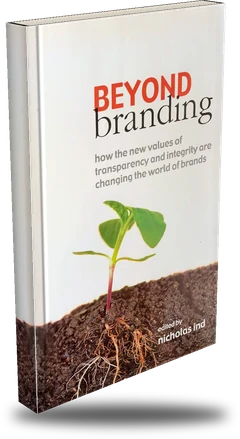
Beyond Branding, hardback, standing, showing the front cover and spine

Beyond Branding

2003. Edited by Nicholas Ind. John’s chapter: ‘What’s brand got to do with it?’

Marketing must move beyond branding if it is to survive. Why do some brands behave responsibly and others not? The book shows branding can benefit employees, customers and investors.

Buy on Amazon

Worth a conversation?

Tell us who you are and what’s on your mind. It comes straight to us.

Writing   Writing on Substack   Films and talks