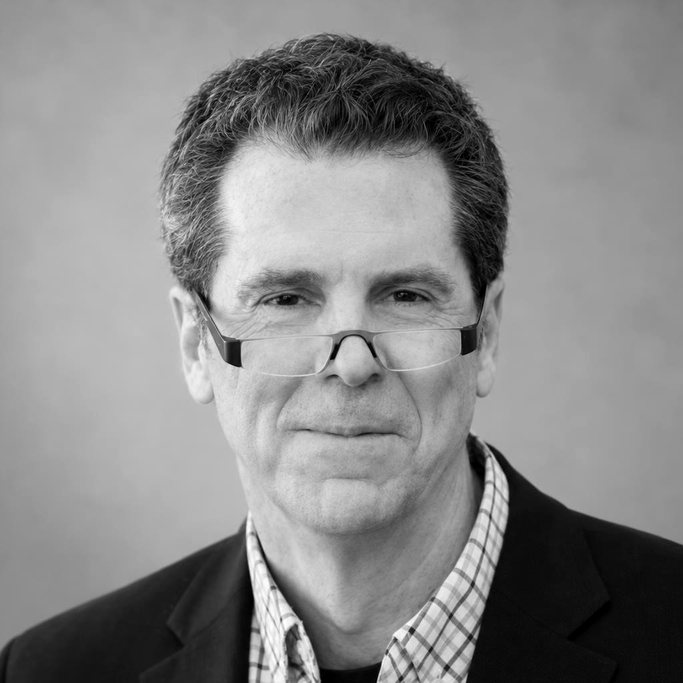
“The best answer to ‘How do you know you have made a high-quality decision?’ is to have confidence in the quality of thinking that went into making it.”
Decision Quality
Most people judge a decision by how it turned out. Kevin has spent much of his career showing leaders why that is a trap. Results depend on luck and on choices other people make. The thinking is the part you control, so it is the part worth getting right. In his own words, “It is the only thing over which you have complete control and for which you can take credit.”
He co-founded DQI and, in partnership with Clint Korver, later his colleague at Ulu Ventures, made decision quality his discipline. Working with leading academics in decision analysis, DQI became one of the first firms to teach those principles to executives with no technical training, and to make a business of it.
The flagship was Decision Quality Leadership, executive training in how to make, and cause others to make, high-quality decisions when the ground keeps moving. By Kevin’s account it was the first commercially successful programme to teach decision analysis to business leaders, and major financial institutions put their people through it.
He built decision systems and tools for one of the largest retail banks in North America and one of the world’s largest credit card lenders. He turned the same methods on strategy, product launches and the hard question of what to sell. He even put them into a venture-funded online company, DecisionStreet, which built industrial-grade decision tools for people facing hard choices in their own lives.
Nine companies
Kevin started out in the building trades. His first company was Lion Coffee, where he ran all the marketing and branding. It went on to a profitable exit after he left.
He then co-founded InnHouse, NortonHoffberg and Inseon, advisory and training firms that took him deep into go-to-market strategy and key account selling for leading companies in the US, Canada, the UK and Australia. He has worked inside Bank of America, Wells Fargo, Fidelity Investments, Microsoft, Sony, EDS, KPMG, Ernst & Young and Arthur Andersen, among many others.
Next came RevenueLab, which he sold to the listed CRM company Onyx Software. He stayed on as its Chief Knowledge Officer, led the rebranding and moved the company from solution selling to strategic selling, around a new idea of an integrated go-to-market and a branded customer experience.
“I’ve started companies and folded companies. Given advice and sometimes even taken some.”kevinhoffberg.com
At Russell Investments he was Managing Director of Marketing for the Private Client Services business, the firm’s US retail mutual fund arm, and built a marketing department that became one of the most highly regarded in asset management.
At Ulu Ventures in Palo Alto, a seed investor that applies decision quality to venture capital, he was a Venture Partner. He evaluated around three hundred companies and helped fund around fifty.
Later he co-founded and chaired Regenerative Industrial, a venture that set out to turn wood waste and farm biomass into high-performance biocarbon for industry.
The path
From a coffee company to the bioeconomy, as Kevin tells it.
- Lion Coffee
Co-founder. Runs all the marketing and branding. The company later has a profitable exit.
- InnHouse
Co-founder.
- NortonHoffberg
Co-founder.
- Inseon
Co-founder and chief executive.
- Aventos
Co-founder.
- RevenueLab
Co-founder. Sold to Onyx Software.
- Onyx Software
Chief Knowledge Officer. Leads the rebrand and the move to strategic selling.
- DQI
Co-founder and Managing Partner. Brings decision analysis to executive teams.
- ThinkSpot
Co-founder and chief executive.
- DecisionStreet
Co-founder and director. Decision tools for life’s hard choices.
- Group Partners
Seven years in the Expert Network, then a director of the company and Managing Director in the US.
- Russell Investments
Managing Director of Marketing, Private Client Services.
- Ulu Ventures
Venture Partner. Around fifty early-stage companies funded.
- Regenerative Industrial
Co-founder, Chairman of the Board and President. Biocarbon from wood waste and farm biomass.
- Hoffberg.Live
Managing Partner.
The writing
Kevin says he has written hundreds of thousands of words on subjects he never expected to know when he was young. The decision work sits at the centre. Decision Owner’s Manual, which he co-wrote, is a detailed guide to executive decision-making, used inside training and advisory assignments. Decision Quality Leadership, self-published and now in its fourth edition, is about how to make, and cause others to make, high-quality decisions.
With Clint Korver he wrote Leadership and Decision Making, a long paper that uses Ernest Shackleton’s voyage on the Endurance to draw a sharp line between heroism and good decision-making. Academics around the world ask to use it in their classes.
On the customer side he wrote Firing Up the Customer with Brent Frei and Kevin Corcoran while at Onyx, built on worldwide research into what drives a branded customer experience. It reached the Amazon catalogue although it was never printed. His paper Selecting a Go-to-Market Strategy is widely referenced, and he has written and spoken often for the Strategic Account Management Association, including a keynote built on his piece Tell Me a Story.
- DecisionDecision Owner’s Manual
- DecisionDecision Quality Leadership, fourth edition
- DecisionLeadership and Decision Making, with Clint Korver
- DecisionMaking Good Decisions
- CustomerFiring Up the Customer, with Brent Frei and Kevin Corcoran
- MarketSelecting a Go-to-Market Strategy
- IdeasForget the Box, on innovation
Group Partners, and Vashon
Kevin goes back a long way with Group Partners. He spent seven years working with it as part of its Expert Network, then joined the company as a director and became its Managing Director in the US, in a role built around Structured Visual Thinking and solving complex business problems. Now he is back in the network.
Home is Vashon Island in the Salish Sea, where he farms at Blue Moon Farms and takes the boat to town when the work needs him. He writes steadily about how people think, from mental models and thinking traps to reciprocity and Walt Whitman.
He admits he has not worked out how to retire. On his own site he puts it plainly: “My curiosity, restlessness, and deeply grooved sense that I only exist if I’m doing something keep badgering at me.”
In his own words
“How do you know you have made a good decision? It is tempting to say, ‘By the results I achieve.’ If only it were that easy.”
“We have an amazing capacity to ‘re-adjust our internal dialog’ to fit and rationalize our current situations.”
“When I was seven, I thought I might be a big game hunter. Who knows why?”
“Keeping your tools sharp, wearing good boots, and stopping from time to time to just look around seem like good advice.”
“I’ve had a long and varied career in business.”
“How large do I dare to live? How far do I dare to grasp?”